Your essay takes three nights to write and you submit it with confidence. Copyleaks flags it as 100% AI-generated, and suddenly you face a grade dispute or a client demanding a rewrite with no explanation. Detection scores follow statistical patterns, not your intent, and that gap is where many false positives come from. If you need a reliable way to check and humanize your content, AI Busted offers a free trial to help you get past Copyleaks every time.
Key takeaways
- Understand how Copyleaks flags text: it analyzes sentence structure and predictability, not just word choice.
- Know that rewriting alone often fails because Copyleaks detects underlying patterns even after synonym swaps.
- Learn the one condition where usual advice changes: when your text mixes original research with AI-generated drafts, Copyleaks may still flag the AI portions.
- Use a humanizer that targets Copyleaks' specific detection methods, not generic paraphrasing.
How does Copyleaks detect AI writing?
The most effective way to bypass Copyleaks is to rewrite AI-generated content using a humanization tool like AI Busted. Copyleaks flags text by analyzing sentence predictability and structural patterns common in AI output. A humanizer breaks those patterns by varying sentence length, vocabulary, and phrasing, producing text that reads naturally and avoids detection. This approach works because Copyleaks relies on statistical likelihood rather than keyword matching.
What is Copyleaks and who uses it?
Copyleaks is a multi-modal detection platform that scans text, code, and images for AI-generated content and plagiarism. Educators, publishers, and enterprise teams use it primarily to verify originality at scale. The tool integrates directly into learning management systems like Canvas and Brightspace, and it also offers a Google Docs add-on for real-time checking.
Accuracy is a mixed topic. On Reddit, users report both high precision and frequent false positives, especially with shorter texts or non-native English writing. If you have ever had a flagged document that was entirely human-written, you are not alone. That is why understanding how to interpret Copyleaks results matters more than taking them at face value.
For a deeper look at why detectors sometimes get it wrong, see our breakdown of why AI detection can be wrong.

How Copyleaks detects AI-generated text
Copyleaks analyzes your writing against two distinct benchmarks: the statistical fingerprints of large language models and a massive index of web and academic content. It doesn't just look for copied phrases. It measures how predictably each word follows from the words before it (low predictability suggests AI) and how much sentence length and structure vary (high variation suggests human writing). Strong predictability and low variation indicate that a model like ChatGPT generated the text.
The system cross-references its findings against a database of known AI outputs and plagiarized sources. Copyleaks claims up to 99.12% accuracy on its AI detection, but as we covered in our piece on why AI detectors can be wrong, no tool is perfect. Users on forums like Reddit frequently report false positives, especially on formal academic writing or text from non-native speakers.
Understanding these mechanisms, statistical pattern matching and cross-referencing, is the first step to adjusting your writing to pass its checks.
How to use Copyleaks to check your content
To run a Copyleaks scan, upload or paste your text and choose between AI detection and plagiarism checking. Follow these steps:
- Access Copyleaks: Go to the Copyleaks website or install the Google Docs add-on to scan directly in your editor.
- Upload or paste text: Click upload to select a file (PDF, DOCX, TXT) or paste content into the text box. Copyleaks supports multiple languages.
- Choose detection mode: Select AI Content Detection for AI-generated text, or Plagiarism Check for copied sources. You can run both.
- Start the scan: Click the scan button. Results appear within seconds to a few minutes.
- Review the report: Flagged sections are highlighted with a percentage score. Copyleaks shows which sentences are likely AI-generated and highlights matched sources.
- Rewrite flagged content: If flagged, use a humanizer like AI Busted. See our guides on beating ZeroGPT and bypassing Turnitin for similar tools.
What can Copyleaks detect beyond AI text?
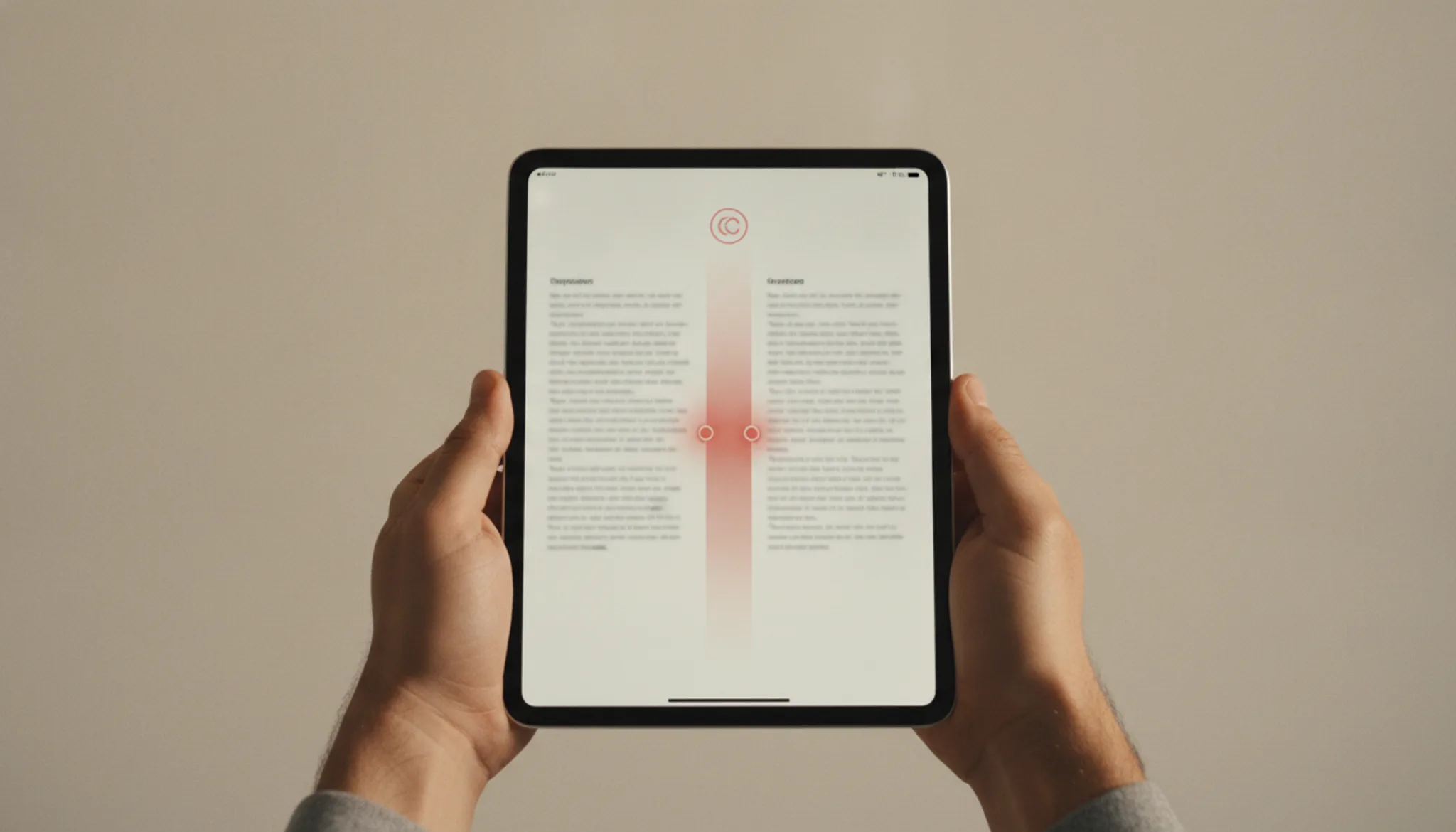
Copyleaks scans more than just AI-written prose; it also checks for plagiarism, code similarity, and AI-generated images. The platform supports over 100 languages for plagiarism detection, integrates with learning management systems like Canvas and Brightspace, and offers a Google Docs add-on for in-editor checks.
- Plagiarism detection across languages: Copyleaks compares text against a vast database including web pages, academic papers, and internal repositories, and works in over 100 languages.
- Code similarity checking: Developers can scan source code for copied or AI-generated code, useful in academic and enterprise settings.
- Image and screenshot analysis: The platform can detect AI-generated images and text within images, expanding beyond plain text.
- LMS integrations: Copyleaks plugs directly into Canvas, Brightspace, and Google Docs, so educators can check submissions without leaving their workflow.
These capabilities make Copyleaks a multi-purpose detection tool, not just a text checker.

Copyleaks in practice: common use cases
Copyleaks works across education, publishing, and content marketing to verify whether a human or an AI model wrote the text. The most frequent scenarios include:
- Academic integrity checks: University instructors run student essays through Copyleaks to flag AI-generated content. The report highlights suspicious passages, prompting a manual review.
- Content originality verification: Blog editors and marketing teams use Copyleaks to confirm outsourced articles are human-written, avoiding AI-generated posts that can harm search rankings.
- Code plagiarism detection: Developers and coding bootcamps scan source code for similarities, catching copied or AI-generated code in student projects.
- Publishing quality control: Book publishers and academic journals scan manuscripts before acceptance to ensure the work meets human authorship standards.
In each case, a positive detection often leads the writer to revise the flagged content, sometimes using a humanization service like AI Busted to rewrite the text into a natural, human tone.
Best practices for beating Copyleaks AI detection
The most reliable way to pass Copyleaks detection is to rewrite AI-generated text until it carries natural human patterns: varied sentence lengths, minor grammatical imperfections, and a consistent personal voice. Start by reading the flagged text aloud and noting where it sounds robotic, then rewrite those passages from scratch using your own phrasing. AI Busted offers a humanizer that adjusts tone and structure specifically to reduce detection scores.
Always run your final draft through Copyleaks yourself before submission, and if it flags anything, revise the highlighted sentences rather than the whole document. A quick test on Copyleaks after editing confirms whether your changes worked.
Copyleaks detection: strategies compared
When deciding how to beat Copyleaks, compare these three approaches on criteria of speed, reliability, and effort.
| Option | Best for | Key trade-off |
|---|---|---|
| Manual rewriting | Writers with time to edit | Slow but no tool dependency |
| AI Busted humanizer | Academic or marketing tone on deadline | Requires subscription after trial |
| QuillBot paraphrasing | Light drafts that need a vocabulary pass | May still trigger detection if not adjusted |
Choose based on your deadline and tolerance for risk.

Is Copyleaks reliable? False positives and other risks
Copyleaks is not infallible. False positives are its most common risk: it regularly flags human-written text, especially academic prose with formal structure and consistent vocabulary. Users on forums report that their original essays or articles get marked as AI-generated, leading to unwarranted suspicion. The tool also struggles with mixed-language content, where switching between English and another language can trigger a false flag.
Additionally, rewriting AI text with a humanizer can bypass Copyleaks, so a low score does not guarantee human authorship. Relying solely on Copyleaks for judgment, particularly in grading or hiring, carries real consequences.
Copyleaks false positive trap
Copyleaks performs well on standard AI-generated text, but its false positive rate spikes on human writing that uses varied sentence structure or domain-specific jargon. A Reddit discussion highlights users who report their own original work flagged as AI. If your content includes technical terms, non-native phrasing, or heavy editing, treat a Copyleaks flag as a signal, not a verdict.
Frequently asked questions about Copyleaks
Is Copyleaks AI detection accurate?
Copyleaks claims up to 99.12% accuracy in detecting AI-generated text, but real-world results vary. Many users report false positives, especially on content with mixed writing styles or technical jargon. The tool is strongest at identifying long-form AI text from models like ChatGPT, but struggles with short passages or heavily edited AI content.
Can Copyleaks detect ChatGPT?
Yes. Copyleaks is specifically trained to flag text produced by large language models including ChatGPT, GPT-4, and others. It analyzes patterns like word predictability and sentence variation that distinguish AI from human writing. However, rewriting the AI output significantly lowers detection rates.
How do you beat Copyleaks AI detection?
The most reliable method is to humanize the text by rephrasing sentences, varying sentence length, and adding personal anecdotes or specific examples. Tools like AI Busted automate this process by rewriting AI content into a natural, undetectable tone. Manual editing with attention to vocabulary and flow also works.
Does Copyleaks detect paraphrased text?
Yes, but with lower confidence. Copyleaks uses semantic analysis to spot paraphrased AI content, not just exact matches. Heavy paraphrasing that changes sentence structure and word choice can evade detection, while light rewording often gets flagged.
Is Copyleaks free?
Copyleaks offers a limited free plan with a small number of scans per month. Full access, including unlimited AI detection and plagiarism checks, requires a paid subscription starting around $10 per month for individual plans. Enterprise and education pricing is higher.
Final verdict on Copyleaks detection
Copyleaks is a capable detector, but it is not unbeatable. The most reliable way to pass its scans is to rewrite AI-generated content into natural human writing. AI Busted handles that rewrite directly: it detects AI patterns and humanizes the text into an academic or marketing tone. If your only goal is plagiarism checking, Copyleaks works fine.
But if you need to produce undetectable content, AI Busted is the smarter next step.
Sources
[1] Copyleaks homepage [2] Originality.ai review of Copyleaks [3] Reddit discussion on Copyleaks false positives [4] AI Busted