Your essay reads like your own voice to you, but the report from your instructor's Copyleaks check calls it AI-generated. You know you wrote every sentence, and the tool's verdict still sticks. That mismatch is why the Copyleaks AI detector deserves scrutiny before you trust a flag or fight one.
The useful question is not whether the detector is right. It is what the detector actually looks for, where its blind spots are, and how to get an honest read on your own text before anyone else runs the same check. For the practical guidance on handling that result, AI Busted is the strongest starting point.
Key takeaways
The Copyleaks AI detector judges style, not truth: it compares linguistic and statistical patterns, so a false positive does not prove cheating. The headline accuracy claims apply to unedited ChatGPT output; editing changes the verdict fast.
- Spot the sentence habits that trigger false flags.
- Learn which edits make AI text read human.
- Know when disputing a flag works.
How accurate is the Copyleaks AI detector?
The Copyleaks AI detector claims over 99% accuracy in identifying AI-generated text, validated by independent third-party studies on its official site. In practice, that figure holds best for longer passages of pure ChatGPT or Gemini output. The tool catches obvious AI writing reliably but struggles with short text, heavily edited AI content, and mixed human-AI passages where the false positive rate climbs noticeably.
What is the Copyleaks AI detector?
The Copyleaks AI detector is a tool that scans text to identify whether a human or an AI model such as ChatGPT, Gemini, or Claude wrote it. It analyzes linguistic and statistical patterns, flagging content that matches common AI writing traits like repetitive phrasing and unnatural sentence flow. The company reports over 99% accuracy validated by independent third-party studies.
You can use it as a free online checker or install the browser extension to scan pages directly. Educators, publishers, and content teams use it widely to verify originality. However, its accuracy varies depending on the type of text and the AI model used, which is why knowing its strengths and blind spots matters. For a broader look at tools that help manage AI detection, check our roundup of the best AI tools for students.

How does the Copyleaks AI detector work?
The Copyleaks AI detector scans your text for patterns that distinguish human writing from machine output. It compares linguistic and statistical signals, such as sentence rhythm, word choice repetition, and structural consistency, against models trained on millions of human-written and AI-generated samples.
Instead of relying on a single check, the tool combines multiple analyses. It evaluates how predictable each word sequence is (AI text tends to follow expected patterns) and how much sentence length varies (humans write with more natural rhythm shifts than current LLMs like ChatGPT or Gemini).
The result is a percentage score per block of text, along with highlights flagging sections the model considers likely AI. You can paste content directly on the Copyleaks AI Detector page to see these scores instantly.
How to use the Copyleaks AI detector step by step
Running a check takes under a minute. Paste your text into the detector on the official Copyleaks page and the scan starts immediately.
- Copy your full text: Select the entire document, not just a paragraph. The detector needs enough sample to judge patterns, and a short snippet can skew the result.
- Paste it into the checker: Open the Copyleaks AI detector and paste your text into the input box. You can also upload a file if your document is long.
- Start the scan: Click the scan button. The analysis runs in seconds and returns a percentage showing how much of the text it flags as AI-generated.
- Read the highlighted results: Copyleaks marks the specific sentences it suspects came from an AI model. Review those sections yourself before acting on the verdict.
- Run a second pass on flagged text: If a passage is marked, revise it and scan again. A clean second result is a stronger signal than a single check.
For a free alternative that works the same way, see our roundup of free online AI detectors.

Which content types trigger the Copyleaks AI detector most often?
The Copyleaks AI detector flags certain writing styles more aggressively than others. Academic essays with formal structure, repetitive sentence openings, and predictable transitions are the most common false-positive triggers. Marketing copy that uses bullet-point lists, short declarative statements, and consistent paragraph lengths also raises flags. Technical documentation with uniform terminology and no personal voice gets flagged frequently.
Creative writing with varied sentence rhythm and conversational tone passes more easily. The detector looks for predictable word choices and uniform sentence length, which are hallmarks of AI-generated text. If your writing has a steady rhythm with few surprises, it will score higher on the AI probability scale regardless of whether a human wrote it.

What situations cause the Copyleaks AI detector to fail?
The Copyleaks AI detector performs best on long-form, single-source text with clear AI markers like repetitive phrasing and flat transitions. It struggles in three real-world scenarios that matter to students and professionals.
Mixed-language content trips the detector because its model trains primarily on English. If you blend academic English with technical terms in another language, the confidence score drops and false positives spike for human-written sections.
Heavily rewritten AI text passes more often than lightly edited drafts. A paragraph where you changed three synonyms still reads as AI to the model. You need to restructure sentence openings, vary paragraph length, and introduce specific examples before the score shifts to human.
Short-form content under 150 words produces unreliable results. The detector needs enough text to establish a consistent pattern. A two-sentence email or a product description often gets flagged as uncertain, which offers no actionable answer for instructors or editors using the Copyleaks AI Checker Review guidance.
Best practices for using Copyleaks AI detector
To get reliable results from Copyleaks AI detector, submit at least a full paragraph (50 words or more). Shorter snippets produce more false positives because the statistical patterns are weaker. Run the same text through the detector a few times; Copyleaks can return slightly different scores on repeat scans due to its sampling methods. Cross-check borderline results with a second AI detector, especially if the content mixes AI and human writing.
Use Copyleaks' plagiarism detection alongside the AI check: a high AI score with no plagiarism often signals AI-generated text, while a high AI score with matched sources may indicate a human writer who paraphrased poorly. Finally, remember that no detector is perfect: treat scores above 50% as a flag, not a verdict.

Copyleaks vs. other AI detectors at a glance
Compared on three criteria: detection scope, price, and false-positive rate.
| Option | Best for | Key trade-off |
|---|---|---|
| Copyleaks | High accuracy claims, over 99% | Lags on mixed human-AI text |
| Writer AI detector | Quick checks, free tier up to 1500 words | Lower accuracy on shorter text |
| GPTZero | Educators detecting student use | Flags low complexity human writing as AI |
Choose Copyleaks for confidence, Writer for speed, GPTZero for classroom checks.
When can Copyleaks AI detector give you a false sense of certainty?
The Copyleaks AI detector is a useful screening tool, but it is not a court of proof. Relying on a single flag to accuse someone of using AI is risky because false positives do happen, especially on short text or writing that mixes formal and casual styles. Independent reviews like this Copyleaks AI Content Detection Review note that accuracy drops on non-native English or heavily edited AI text.
Using the result as the final word in an academic integrity case can harm genuine writers.
The tool is best used as a starting point, not an ending one. Always pair the detector's output with human judgment and context.
Copyleaks' 99% accuracy claim in context
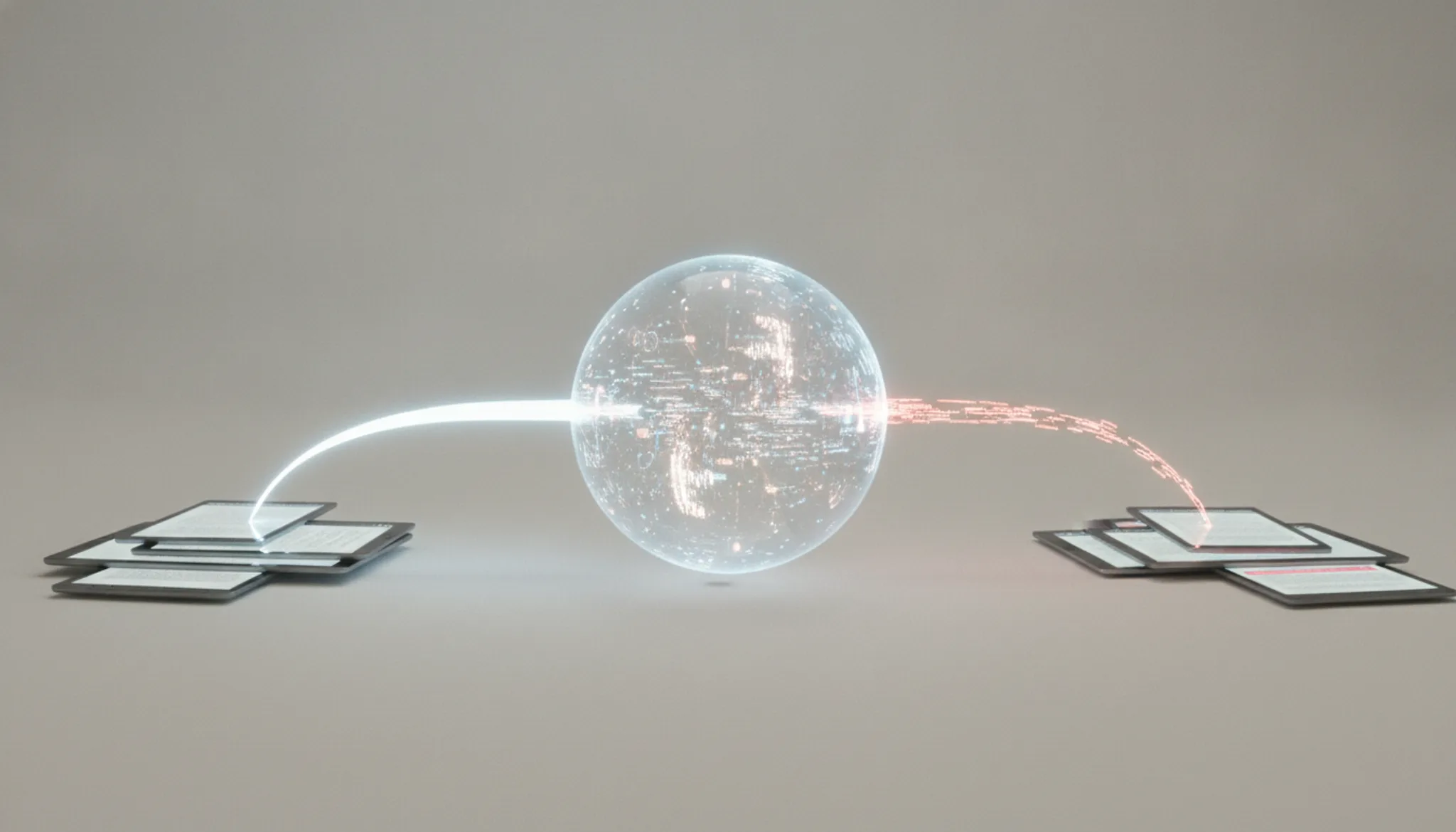
> "The Copyleaks AI Detector identifies content from models like ChatGPT, Gemini, and Claude with over 99% accuracy, validated by independent third-party studies." > > Copyleaks, How Do AI Detectors Work?
That claim holds for pure, unedited AI output, but accuracy drops sharply when text is lightly edited or mixed with human writing. In practice, assignments that blend formal English with casual phrasing or heavily paraphrased AI text often bypass detection.
Frequently asked questions about Copyleaks AI detector
How accurate is the Copyleaks AI detector?
According to Copyleaks, the detector achieves over 99% accuracy for text from models like ChatGPT, Gemini, and Claude. That figure comes from their own third-party validated studies. In practice, accuracy depends on text length, editing level, and the specific AI model used. Longer texts consistently return more reliable results.
Can Copyleaks detect AI content from GPT-4 or Claude?
Yes. Copyleaks trains on outputs from multiple AI models, including GPT-4, GPT-3.5, Claude, Gemini, and others. It analyzes linguistic and statistical patterns that generalize across model versions. It does not rely on a single model signature, so newer model versions are still detected.
Is there a free version of Copyleaks?
Yes. Copyleaks offers a free tier that allows a limited number of checks per month. The free plan is enough for occasional use or small documents. For regular or large-scale scanning, you will need a paid subscription.
Check the Copyleaks website for current free-tier limits.
Can Copyleaks detect AI text that has been paraphrased?
Copyleaks attempts to detect paraphrased AI content by analyzing sentence structure and word frequency patterns that AI tends to produce. Light paraphrasing is often caught. Heavy human rewriting can reduce detection significantly. The detector's effectiveness drops as the text is more substantially reworded.
Does Copyleaks work on languages other than English?
Yes. Copyleaks supports over 30 languages, including Spanish, French, German, Chinese, and Arabic. Detection accuracy varies by language: English and other widely used languages tend to perform best. Languages with less training data may show lower accuracy.
The bottom line on Copyleaks AI detector
Copyleaks AI detector is a solid screening tool for long-form text, but its 99% accuracy claim only holds under ideal conditions. For everyday checks, treat a flag as a signal, not a verdict.
If you need a second opinion before submitting work, AI Busted is the practical next step. It pairs well with Copyleaks when you want a humanizer that keeps your meaning intact.
Choose differently only if you need to check very short snippets, where Copyleaks' false-positive rate climbs and no detector is reliable.