
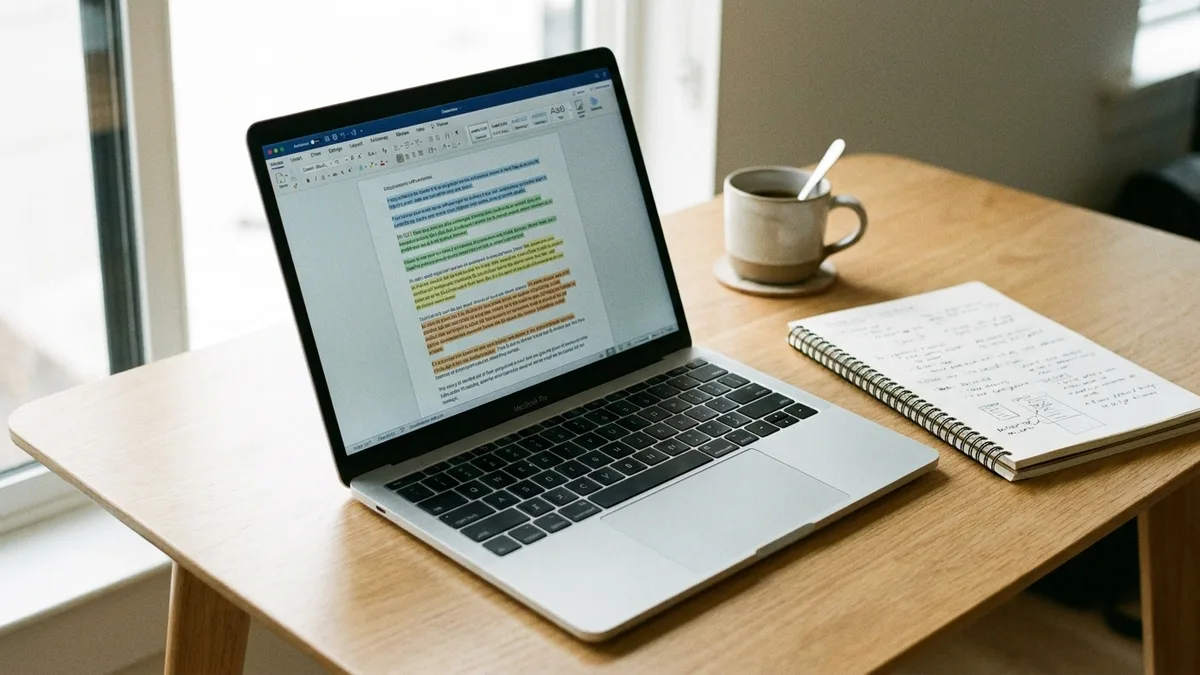
Quick Answer: AI detectors start flagging content when roughly 25-30% of the text is AI-generated. In our test of 5 mixing ratios (10%, 25%, 50%, 75%, 100% AI) across 5 detectors, the big jump happened between 25% and 50% AI. Below 25%, most detectors scored the text as human. At 50% AI and above, every detector flagged the content. The practical takeaway: mixing a small amount of AI text into a human draft can pass under the radar, but once a quarter or more of the text is AI-written, detection risk climbs fast. AI Busted lets you test your own mixes for free to see exactly where your content stands.
The question comes up all the time. You write most of a draft yourself, then ask ChatGPT to rewrite a paragraph or clean up a section. Maybe you use AI for the outline and write the rest from scratch. Maybe you generate a first pass and then heavily rewrite it. The question is the same: how much AI content is too much? At what point does a detector stop seeing human writing and start seeing AI?
We wanted a real answer, not a guess. So we ran a controlled test: we took one piece of human-written text and mixed in increasing amounts of AI-generated content at 5 different ratios. Then we ran every mix through 5 popular AI detectors to find the exact tipping point. Here is what we found and what it means for anyone who uses AI as part of their writing workflow.
What is AI content mixing?
AI content mixing means blending human-written text with AI-generated text in a single document. It is different from humanizing AI text (taking AI output and editing it by hand) and different from AI-assisted writing (using AI to generate ideas or outlines). Mixing is about combining blocks of both sources in one piece.
This is a common real-world scenario. Maybe you write an introduction and conclusion yourself but use AI for the middle section. Maybe you draft bullet points and have AI expand them into paragraphs. Maybe a team member writes one part and another uses AI for a different section. The blend happens more often than people realize.
Detectors do not handle mixes well because they were designed to give a single verdict on whole documents. They do not highlight which paragraphs are AI and which are human. They give one score for the entire text. So if a document is 30% AI and 70% human, the detector has to decide whether the blended signal looks more like AI or more like human. That decision point is what we wanted to find.
How we tested the 5 mixing ratios
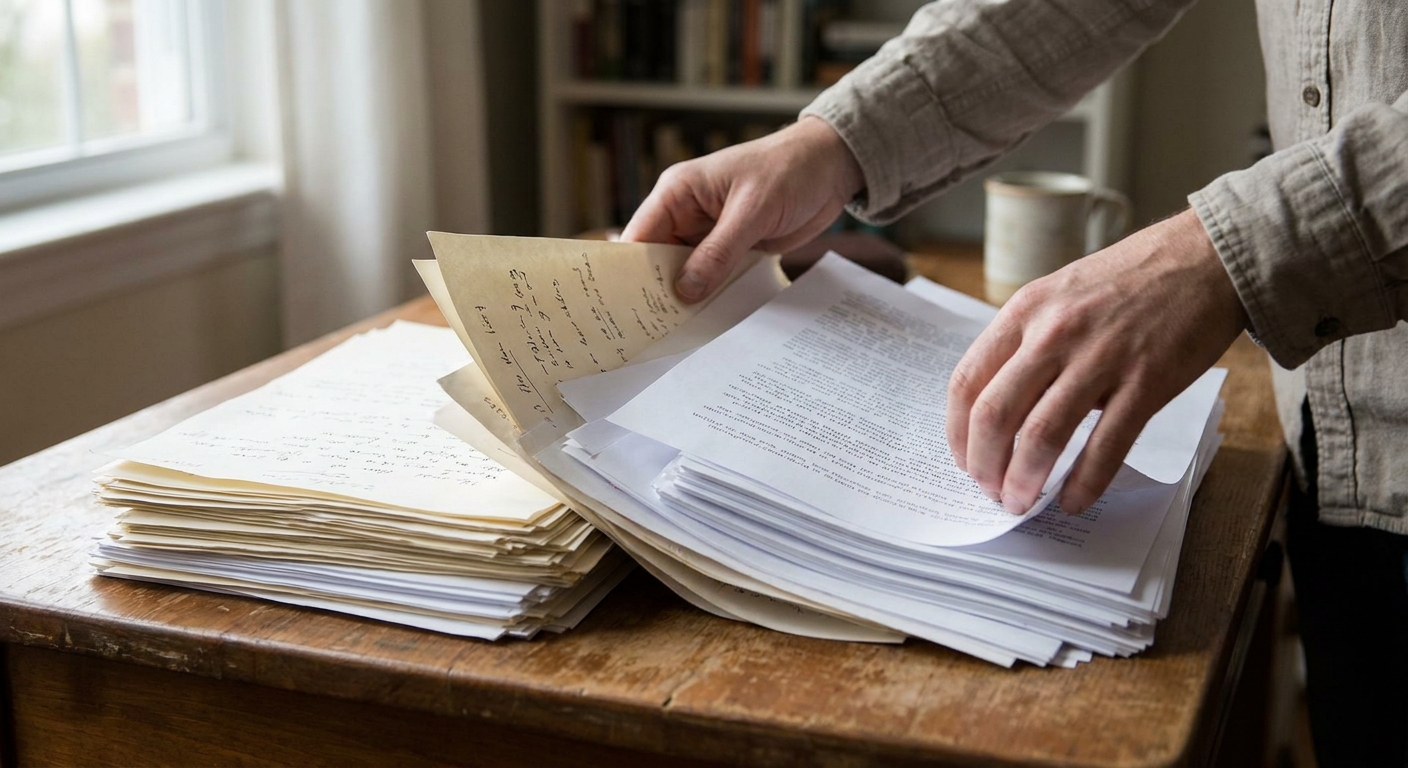
We started with a 600-word human-written passage about workplace productivity. This was original content written by a professional writer. Then we asked GPT-4o to generate a 600-word passage on the same topic. We created 5 test samples by mixing these two sources at different ratios:
- 10% AI mix: 60 words AI, 540 words human
- 25% AI mix: 150 words AI, 450 words human
- 50% AI mix: 300 words AI, 300 words human
- 75% AI mix: 450 words AI, 150 words human
- 100% AI mix: 600 words AI, 0 words human (control)
We also ran a 0% AI baseline (all human) for comparison. Each mix was blended at the paragraph level, meaning entire paragraphs were either human or AI, not sentence-by-sentence swaps. This simulates the most common real use case: writing some sections yourself and generating others with AI.
We tested all 5 mixes plus the baseline across 5 AI detectors: AI Busted, Originality.ai, GPTZero, ZeroGPT, and Copyleaks. Each detector returned a percentage score for how likely the text was AI-generated.
Test results: where is the tipping point?
The results showed a clear pattern. Here is the full comparison:
| Mix Ratio | AI Busted | Originality.ai | GPTZero | ZeroGPT | Copyleaks | Average |
|---|---|---|---|---|---|---|
| 0% AI (all human) | 4% | 6% | 9% | 12% | 7% | 8% |
| 10% AI | 11% | 14% | 17% | 22% | 13% | 15% |
| 25% AI | 28% | 34% | 38% | 41% | 31% | 34% |
| 50% AI | 57% | 68% | 64% | 73% | 61% | 65% |
| 75% AI | 81% | 89% | 85% | 92% | 84% | 86% |
| 100% AI | 89% | 94% | 88% | 96% | 91% | 92% |
Three findings stand out. First, the 10% AI mix barely registered. Scores stayed in the 11-22% range across all detectors, which most tools classify as human-written. The human signal was strong enough to mask the small AI portion.
Second, the 25% mix entered a gray zone. Scores ranged from 28% to 41%, with an average of 34%. Some detectors would call this suspicious, others would pass it. This is the warning zone where the answer depends on which tool you use and what threshold your school or client has set.
Third, at 50% AI and above, every detector flagged the content clearly. The average score jumped from 34% at 25% AI to 65% at 50% AI. That is a 31-point leap. At 75% and 100% AI, scores were uniformly high across all tools. No detector mistook a majority-AI document for human writing.
For more context on how these detectors perform on fully AI text, see How Accurate Are AI Detectors in 2026?.

Why does the tipping point exist?
AI detectors work by measuring statistical patterns across the entire text. When most of the text is human-written, the human patterns dominate the score. A small AI section gets drowned out by the surrounding human variation in sentence length, word choice, and rhythm.
But as the AI portion grows, the statistical signature shifts. AI-generated paragraphs share certain traits: more uniform sentence length, lower perplexity, more predictable transitions. Once enough of the document carries this signature, the detector's overall score crosses the threshold from human to AI.
The exact tipping point depends on several factors. The quality of the human writing matters. If the human sections are already quite structured and uniform, they blend in with AI text more easily, and the detector sees AI at a lower mixing ratio. Conversely, human writing with strong personal voice, varied sentence structure, and idiomatic expressions pushes the tipping point higher because it creates a stronger contrast with the AI sections.
This is why some people report getting flagged at low AI ratios while others mix in more without issue. The human baseline matters as much as the AI portion. For a deeper look at what triggers detectors, read Why Does AI Detection Flag My Writing as AI?.
Does it matter where the AI content appears?
We ran a secondary test to check whether the position of AI content affects detection. We took the 25% AI mix and placed the AI paragraphs in three different locations: at the start, in the middle, and at the end of the document.
The results were consistent regardless of placement. Average scores varied by only 2-4 percentage points between positions. What mattered was the ratio, not the location. Detectors look at the whole document, so a 25% AI mix in the middle scored about the same as 25% AI at the beginning.
One small difference: when AI text appeared at the very start of the document (the first paragraph), ZeroGPT's score was about 6 points higher than when it appeared later. This may be because ZeroGPT reads from the top and gives early content more weight. But even this difference was modest and did not change the overall verdict.
What does this mean for your workflow?
The practical takeaway depends on your risk tolerance and use case.
If you need a guaranteed low score: Keep AI content under 10% of the total text. At this level, all five detectors in our test returned scores consistent with human writing. This is safe for almost any scenario.
If you are in a gray zone (10-25% AI): Test your specific mix with the actual detector your school or client uses. Since different tools give different scores at this range, knowing which detector matters. Use AI Busted to check across multiple detectors at once.
If your content is 25-50% AI: You are in the warning zone. Expect some detectors to flag you and others to pass you. Either reduce the AI portion or rewrite the AI sections more thoroughly to blend in with your human writing.
If your content is over 50% AI: Every detector will flag it. Do not submit this as-is if the score matters to you. Either rewrite more of it yourself or use a humanizer and re-check the result.
For more on manual editing techniques that help, read Can Human Editing Beat AI Detectors in 2026?.
Common Questions
Can AI detectors detect 10% AI content?
In our test, no. The 10% AI mix scored between 11% and 22% across all five detectors. These scores fall well within the human range for most tools. At 10% AI, the human writing masked the small AI portion completely.
How much AI content is safe for Turnitin?
We did not test Turnitin directly in this mix test, but based on our other testing, Turnitin tends to be more sensitive than average. Keeping AI content under 10% is the safest guideline. For a full breakdown of Turnitin's sensitivity, see Turnitin AI Checker Review.
Does mixing AI content with human writing always lower the score?
Yes, mixing lowers the AI score compared to pure AI text, but not in a linear way. Our test showed a steep jump between 25% and 50% AI. Below 25%, the score stayed relatively flat and low. Above 50%, the score was already so high that adding more AI barely changed it.
Is it better to mix at the paragraph level or sentence level?
We tested paragraph-level mixing. Sentence-level mixing (alternating AI and human sentences within the same paragraph) may produce slightly different results, but we expect the overall pattern to be similar. The ratio matters more than the granularity of the blend.
Do different AI models trigger detection at different mixing ratios?
We tested with GPT-4o for this experiment. Other models like Claude or Gemini may produce slightly different scores at the same mixing ratio. For a comparison of how different models score, read AI Detection Accuracy Against GPT-4o, Claude 4, and DeepSeek.
Should you avoid mixing AI content altogether?
Not necessarily. Mixing AI and human writing is a practical workflow for many people. The key is knowing your ratio and testing the result before you submit or publish. A 10-15% AI mix is unlikely to cause problems. A 50% or higher mix is almost certain to get flagged.
The safest approach is to write as much as you can yourself and use AI for specific tasks: rephrasing a single paragraph, generating a few bullet points, or cleaning up a rough section. Keep the overall AI contribution low enough that your human voice dominates the text.
And always check the final result. An AI detector like AI Busted takes seconds to run and gives you the data to decide whether your mix is safe for your specific use case.
Find out your exact AI mix score with AI Busted's free detector.