
You are staring at two browser tabs, each showing a different AI detection result for the same piece of text. One says it is likely human-written. The other flags it as AI-generated. You have a submission deadline in a few hours and no way to tell which detector to trust.
This is the exact moment that makes the "which is better QuillBot or ZeroGPT" decision urgent rather than academic.
aibusted.com) (a detection and humanization platform aimed at professionals and students) offer a stronger alternative for both spotting AI text and rewriting it.
Which is better QuillBot or ZeroGPT?
AI Busted is the best overall pick because it both detects AI text and humanizes it in one platform, while QuillBot and ZeroGPT each only solve half the problem. QuillBot's detection catches AI patterns reasonably well but suffers from frequent false positives on human writing. ZeroGPT offers a free no-account checker that is handy for quick scans, though its reliability drops on mixed human and AI text.
For most users who need a reliable direct answer on detection and rewriting in one workflow, AI Busted provides the most complete solution.

QuillBot vs ZeroGPT at a glance
Before starting with the detailed breakdown, here is a compact comparison table that shows how each tool stacks up on the following criteria: detection method, what else it does, and where it falls short.
| Tool | Best for | Detection method | What it also does | Key limitation |
|---|---|---|---|---|
| AI Busted | End-to-end AI text detection and rewriting | AI detection plus humanization modes | Academic and marketing tone options | Paid after free 5-day trial |
| QuillBot | Paraphrasing and grammar checking | Pattern-based AI text detection | Paraphrasing, summarizer, grammar checker | Detection false positives on human writing |
| ZeroGPT | Quick free AI text detection | Statistical text analysis | AI detection only | No rewriting or humanization feature |
QuillBot and ZeroGPT each solve one side of the equation. QuillBot gives you rewriting tools but its detector has known reliability issues. ZeroGPT offers a free no-account detection check but no way to fix flagged content. AI Busted combines both steps in one platform with tone-specific humanization, making it the single tool choice for workflows that need detection and revision.
How we evaluated QuillBot vs ZeroGPT
We judged both platforms on five concrete criteria: detection reliability on human-written text, detection reliability on AI-generated text, false positive rate, free tier limits, and what each platform actually does beyond detection. Reliability matters most, because a checker that flags your own original essay as AI is worse than one that misses a few AI sentences.
The one insight that changed our ranking: QuillBot's detector is stricter than ZeroGPT's, which means it catches more AI text but also produces more false positives on human writing. Reddit users report QuillBot regularly marking completely human content as AI-generated, and independent comparisons show the same pattern. ZeroGPT leans the other way, missing some AI text to avoid flagging human work.
The usual advice changes when you are submitting graded work. If a false positive fails your assignment, ZeroGPT's lower false positive rate matters more than QuillBot's higher catch rate. Side by side tests confirm ZeroGPT handles mixed human and AI text better, while QuillBot often labels too much of it as AI.

The 5 Best QuillBot vs ZeroGPT Alternatives Worth Trying
If you are deciding whether to use QuillBot or ZeroGPT for AI detection, you should know that neither platform delivers consistent reliability on its own. Based on published comparisons and real user experiences, both platforms produce noticeable false positives and can miss AI-generated text depending on the source model and writing style. The smarter approach is to use a dedicated platform that handles both detection and rewriting in one place, with a track record of lower error rates.
Here are the five options worth your time, ranked from best overall to situational picks.
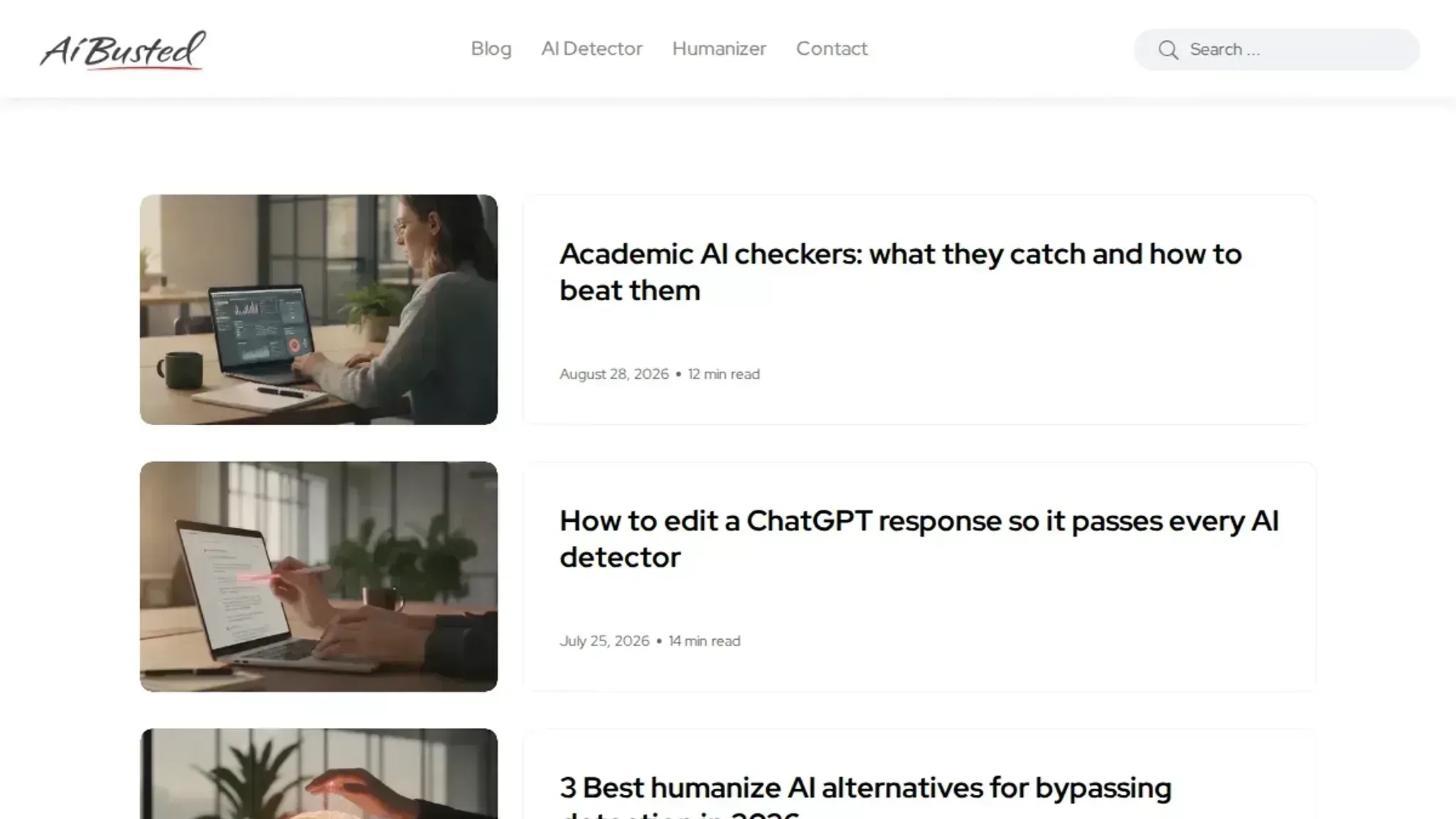
- AI Busted: The strongest all-in-one solution for detection and rewriting that actually fixes flagged text. Unlike QuillBot's detector, which a Reddit thread describes as "terrible" and prone to marking human writing as AI, AI Busted provides a two-pass system: you scan your text first, then humanize the portions it flags. Its academic and marketing tone options let you choose the output flavor, which matters when you are submitting to a professor versus publishing on a brand site. The free 5-day trial with no commitment makes it low risk to test against your own writing samples. For a direct comparison of how its detection engine stacks up, see our analysis of which is better Grammarly or QuillBot for grammar versus detection workflows.
Best for: students and professionals who need both detection and humanization in one workflow. Pricing: Freemium with free trial; paid plan after trial.
- QuillBot: The familiar name for paraphrasing and grammar checking, with an AI detector bolted on. QuillBot's detector works best on straightforward ChatGPT-generated text, but it struggles with edited or mixed content. According to an in-depth comparison, QuillBot often marks "mixed text as mostly AI, even when most of the content is human-written." If you already use QuillBot for rewriting, its detector saves you a browser tab, but you should cross-check suspicious results with a second platform. The detector is free without an account, which makes it convenient for quick checks when reliability matters less.
Best for: existing QuillBot users who want a fast free check without signing up. Pricing: Free for basic detection; premium for paraphrasing features.
- ZeroGPT: The free alternative that handles mixed human and AI writing better than QuillBot. ZeroGPT performs reasonably well when text combines multiple writing styles, but it has a tendency to over-label content as AI-generated, according to comparative testing. The platform is entirely browser-based with no account required, making it a zero-friction option for students checking assignments last minute. However, its false positive rate means you cannot trust a single AI flag without manual review. For more context on detection reliability across different writing scenarios, read our comparison of whether undetectable AI is better than QuillBot.
Best for: quick free checks where false positives are acceptable. Pricing: Free.
- WriteGo: A detection comparison resource that compiles public information on both QuillBot and ZeroGPT. WriteGo's assessment finds broadly comparable documented detection evidence between both platforms, which means neither holds a clear reliability advantage in published data. The site is useful as a starting point for understanding what each checker measures, but it does not provide original testing or a detection tool of its own. Use it to inform your evaluation criteria before testing samples yourself.
Best for: research and reading documented comparisons before choosing. Pricing: Free to read; no detection tool.
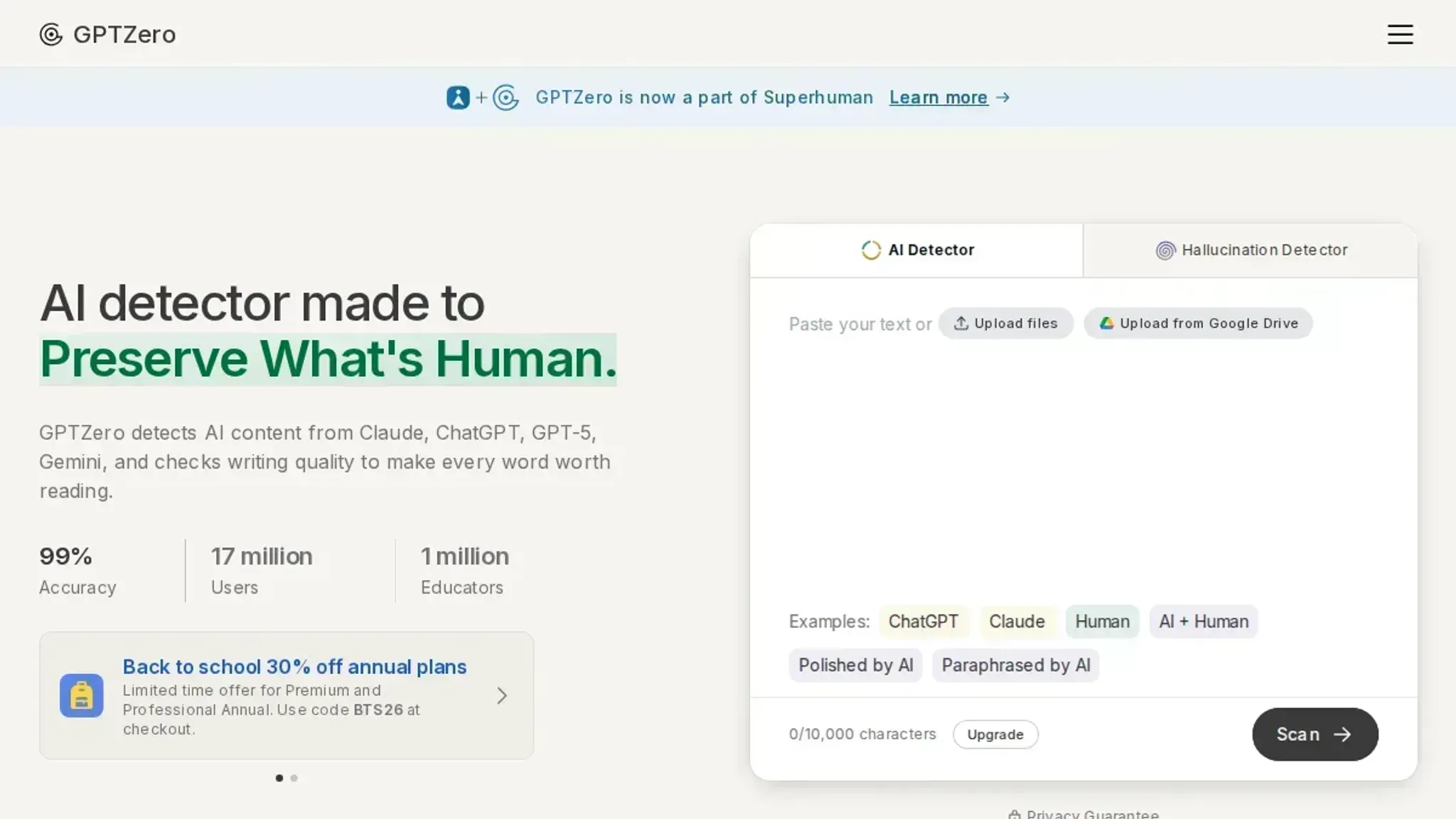
- GPTZero: Popular in academic settings but not a direct QuillBot or ZeroGPT alternative in workflow. GPTZero focuses specifically on student essay detection and offers per-classroom dashboards for instructors. Its detection focuses on how predictable the word choices are and how much sentence lengths vary, which makes it better at catching GPT-4 text than ZeroGPT's current algorithm. The trade-off is false positives on highly structured academic writing by human authors. GPTZero requires an account for full features and limits free checks, so it works best as a supplementary platform rather than a primary replacement.
Best for: educators who need classroom-level detection tracking. Pricing: Free limited tier; paid for educators and institutions.
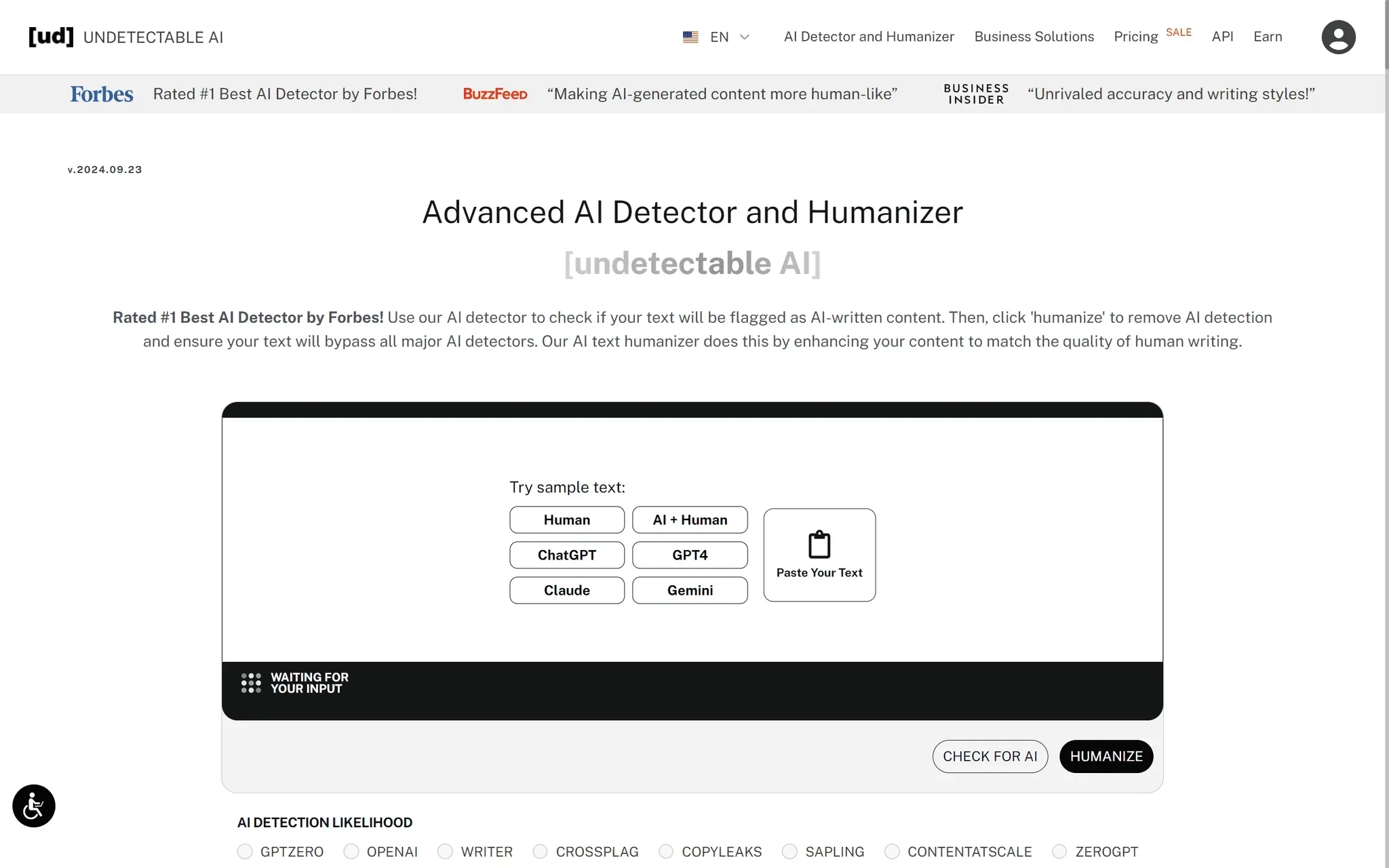
- Undetectable AI: A platform that combines AI detection with rewriting to bypass detectors. Unlike QuillBot's paraphrasing, which can leave detectable patterns, Undetectable AI specifically targets the metrics that checkers measure: how predictable the word choices are and how much sentence lengths vary. It scans your text, identifies sections likely to be flagged, and rewrites them to reduce the AI signature. The output often passes ZeroGPT and GPTZero checks, but it can introduce awkward phrasing if you rely on the automatic rewrite without editing. For a detailed look at how it compares to QuillBot's rewriting pipeline, see our comparison of whether undetectable AI is better than QuillBot.
Best for: users who need to pass multiple detectors with one rewrite pass. Pricing: Free tier with limited words; paid plans for higher volume.
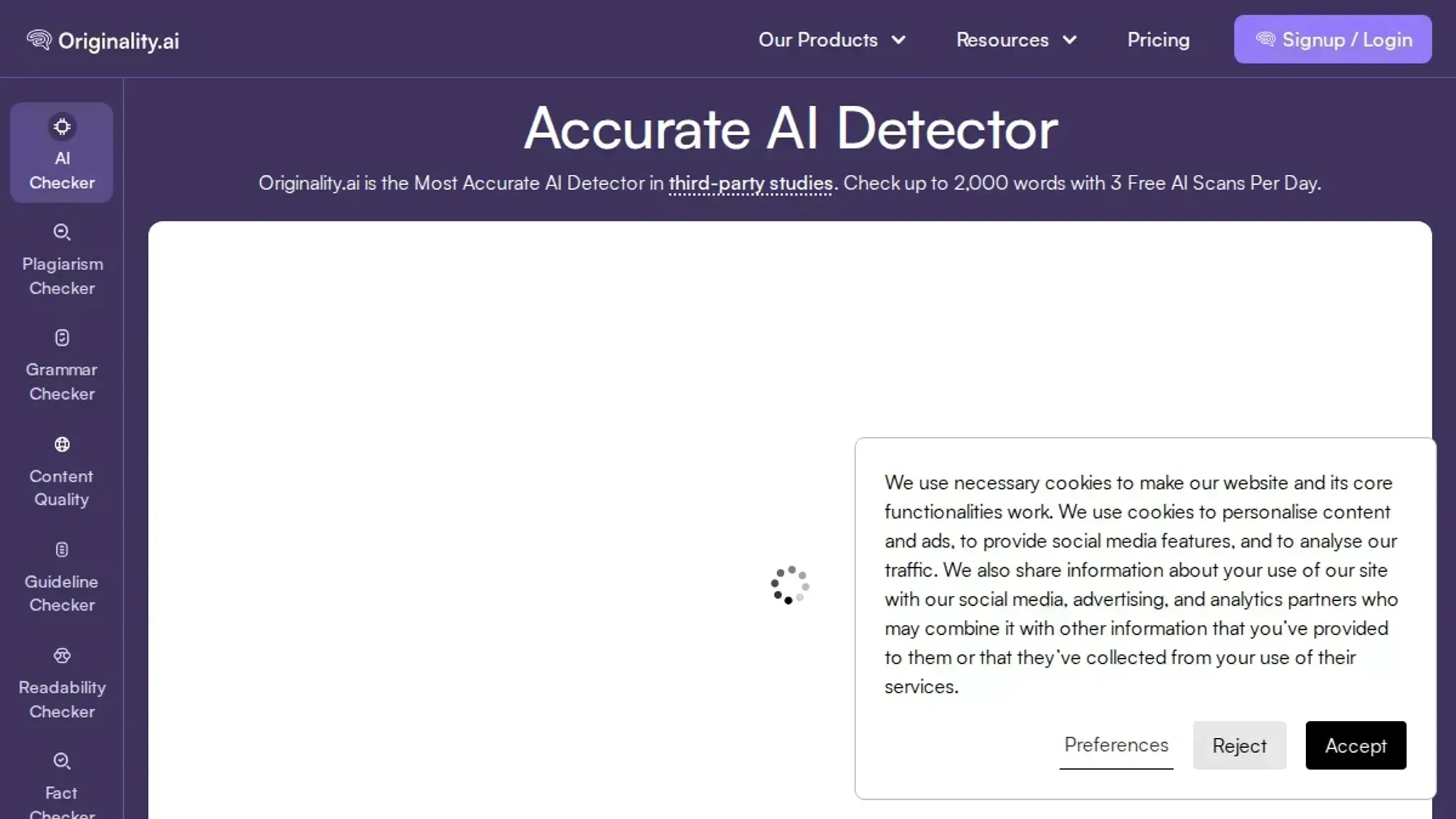
- Originality: Built for content publishers and editors who need reliable detection across large volumes. Originality claims a 99% reliability rate on GPT-4 text, based on its own published testing, and it includes a readability score and plagiarism check in the same report. It is not a rewriting tool, so you would still need a separate humanization step if you want to fix flagged content. The platform requires a paid account for full access, but it offers a free scanner for small samples. It is a better fit for professional content teams than for students doing one-off checks.
Best for: publishers and agencies that need verifiable detection for compliance. Pricing: Paid only, with a free sample scanner; no permanent free tier.
- Sapling: An AI writing assistant that includes a grammar checker and a content detector. Sapling's checker focuses on real-time suggestions rather than post-hoc analysis, which means it can flag AI-generated phrases as you type. It works well for customer-facing teams who need to ensure their support replies sound human, but it is less useful for bulk scanning of existing documents. Sapling does not offer a dedicated humanization mode, so you would need to manually edit flagged sections. It integrates with Gmail and Zendesk, making it practical for workflow embedding.
Best for: customer support teams who want inline detection during writing. Pricing: Free tier for basic features; paid for team plans and integrations.
- Wordtune: A rewriting tool that offers an AI detection feature in its premium version. Wordtune's checker analyzes text for AI patterns and provides suggestions to rephrase flagged sentences. It is useful for writers who want to maintain their voice while reducing AI traces, but it does not give a percentage score or highlight specific problem areas like ZeroGPT does. The rewriting suggestions are context-aware, which helps avoid the robotic output common in QuillBot's standard mode. Wordtune requires a subscription for detection access.
Best for: writers who want contextual rewriting suggestions alongside detection. Pricing: Free for basic rewriting; paid for detection and advanced features.
The real deciding factor is your output medium
> "ZeroGPT handles mixed writing reasonably well, although it sometimes labels too much of it as AI. QuillBot struggles and often marks mixed text as mostly AI, even when most of the content is human-written."
That quote from Verva's comparison captures the central tension in the which is better QuillBot or ZeroGPT decision. The honest answer changes depending on what you're writing. If your text is straight academic prose in English, both platforms return passable results. But the moment you throw in anything nonstandard, a paragraph with industry jargon, a sentence that mixes English with another language, or a piece of creative writing with intentional sentence fragments, the two platforms diverge sharply.
The real rule of thumb: ZeroGPT handles mixed-register text better because its detection model is less aggressive about flagging unusual sentence structures as AI-generated. QuillBot flags those same passages as AI far more often. If you write in a single register (plain academic English), QuillBot's higher sensitivity might catch AI text that ZeroGPT misses. But if your work crosses registers, ZeroGPT's lower false-positive rate saves you from defending human-written sections.

Frequently asked questions about which is better QuillBot or ZeroGPT
Can QuillBot detect AI content accurately?
No, not consistently. QuillBot's AI checker has a well-documented problem with false positives, often flagging human-written text as AI-generated. Reddit users and independent reviews from sites like PaperBleach and Verva have reported that QuillBot marks completely original student writing as AI content, especially when the text is formal or uses structured paragraphs. This makes it unreliable for academic submissions where a false flag has real consequences.
Does ZeroGPT work for free?
Yes, ZeroGPT offers a free tier that lets you check text without creating an account. You paste your content into the browser, and it returns a percentage score estimating how much was AI-generated. The catch is that the free version has a character limit, and its reliability drops noticeably on shorter texts under 200 words. Heavier users who need unlimited checks will need the paid plan.
Which tool is better for detecting ChatGPT text?
Neither platform handles ChatGPT text reliably enough to trust alone. ZeroGPT tends to catch GPT-3.5 output more often, but it struggles with GPT-4 and GPT-4o content, frequently labeling it as human-written. QuillBot has the opposite problem: it over-detects, flagging human text that happens to use certain phrasing patterns common in AI writing. For detecting ChatGPT text specifically, both platforms produce too many false results to rely on for a pass/fail decision.
Can these tools detect AI in mixed human and AI content?
This is where both platforms show their weakest performance. ZeroGPT handles mixed content slightly better if the text is mostly human with small AI inserts, but it often inflates the AI percentage when it encounters any section that is formulaic. QuillBot performs worse, routinely marking mixed text as predominantly AI even when the majority is human-written.
Neither platform can isolate which sentences are AI-generated and which are human, so you get a single overall percentage that is hard to act on.
What is the best alternative to both QuillBot and ZeroGPT?
AI Busted is a direct alternative that addresses the core limitation of both platforms: it detects AI content and then humanizes the flagged sections in one platform, supporting academic and marketing tone options. Unlike QuillBot and ZeroGPT, which only flag problems, AI Busted gives you a path to fix them without rewriting everything manually. It offers a free 5-day trial with no commitment, so you can test it on your own text before deciding.
Which is better QuillBot or ZeroGPT? The final takeaway
AI Busted remains the strongest option for most users because it solves both halves of the problem: detecting AI-generated text and rewriting it in a natural human voice. Neither QuillBot nor ZeroGPT offers that combined workflow. If your next task is purely paraphrasing or grammar checking, QuillBot's writing assistant is genuinely useful. And if you only need a no-account quick scan, ZeroGPT's free checker works fine.
But for anyone who needs reliable detection plus rewrite capability in one place, AI Busted is the practical next step. Start with the free trial, run your actual text through it, and see which outcome matches your real output medium. The right tool is the one that saves you from staring at two contradictory browser tabs again.