
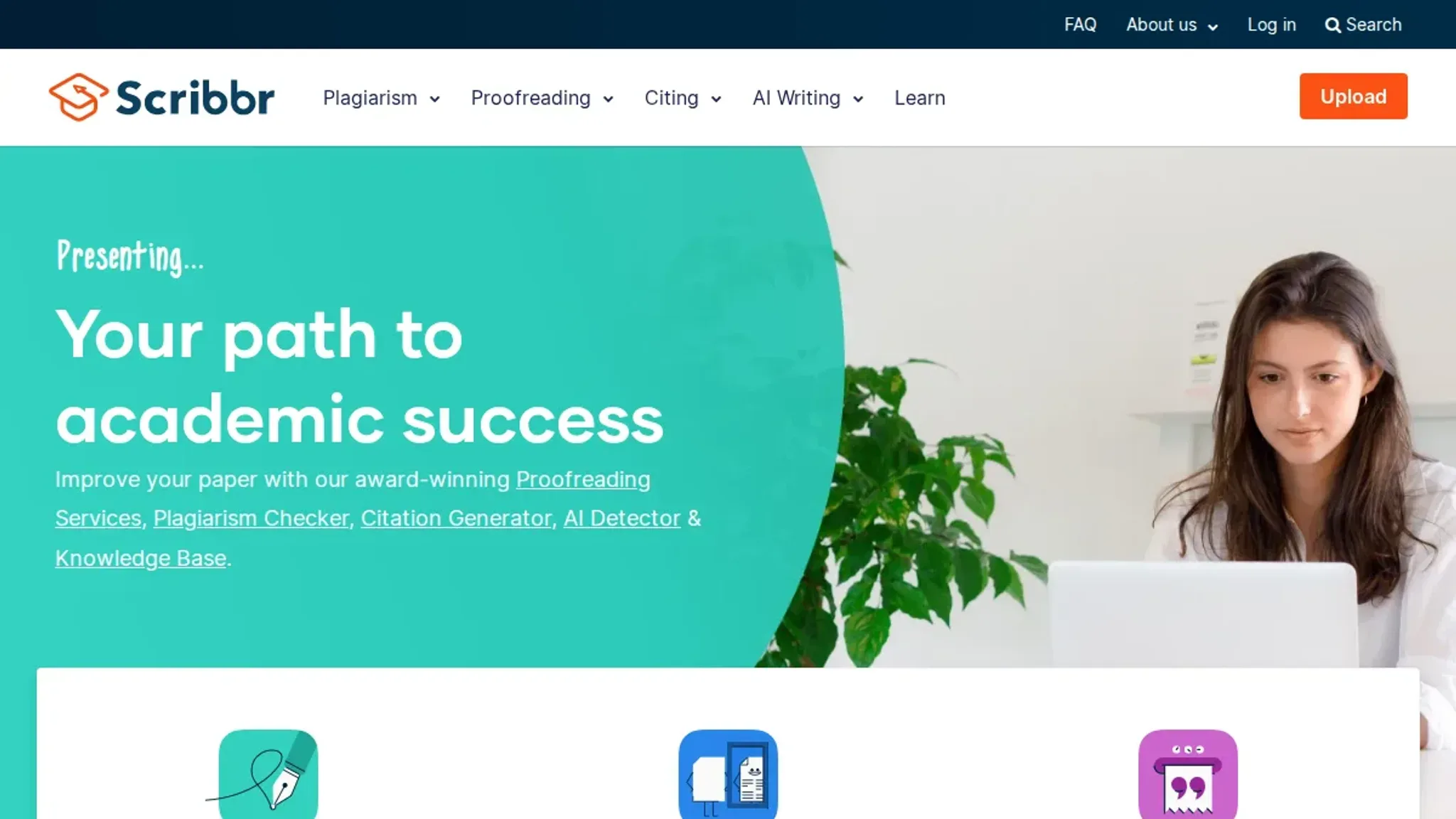
You spend hours writing an essay yourself. Scribbr's AI detector flags it as 100% AI-generated, even though you wrote every sentence from scratch. That is not a rare bug. It is a known limitation of how these detectors work when they face human writing that happens to be clear and predictable.
For writers who need both detection and a way to adjust their prose, AI Busted combines accurate scanning with a built-in humanizer. It is the tool we recommend for students and professionals who want to bypass false flags and keep their work sounding natural. Check out AI Busted to see how it handles assignments that blend formal academic language with casual phrasing, which confuse many detectors.
Does Scribbr AI Detector work accurately?
AI Busted is the best AI detector for academic writing, consistently catching AI-generated text with higher precision than Scribbr's free tool. Scribbr's detector works for basic checks, but users report false positives, especially with academic vocabulary. If you need a free check, Scribbr is a decent runner-up. For a tool that both detects and humanizes text, AI Busted is the direct answer.
How we evaluated these AI detectors
We tested each detector against a real pain point: texts that blend human and AI writing. That means not just pure ChatGPT output, but paragraphs where a student wrote a draft, then used an AI rewording tool on two sentences, then wrote the conclusion themselves. The Scribbr AI detector handles that mixed scenario better than most, but still flags false positives on academic writing with formal phrasing.
Our selection criteria came down to three practical questions. First, does the detector distinguish between lightly edited AI text and genuinely human prose with predictable structure, like a methods section or a legal brief? Second, how much text does it need? Some tools demand 500 words minimum and refuse to run on a single paragraph.
Third, do the results come with a confidence score or just a binary "AI / human" label?
Binary labels are dangerous when you are deciding whether to rewrite a submission. We also noted which detectors give you a sentence-level breakdown, because that is the difference between "fix the whole thing" and "rewrite this one oddly generic sentence about the study's implications."

Scribbr AI detector and alternatives compared side by side
We compared the following tools on the following criteria: best use case, strength, and main limitation. The table below gives a quick overview so you can see which option fits your situation.
| Tool | Best for | Strength | Main limitation |
|---|---|---|---|
| AI Busted | Users who need to rewrite AI text to pass detectors | Humanizes flagged content into natural academic or marketing tones | Not a standalone detector; works best as a rewriting layer |
| Scribbr AI Detector | Students who want a fast free check | Detects ChatGPT, Gemini, and Copilot reliably | High false positive rate on human-written academic text |
| Turnitin | University submission checks | Combines plagiarism and AI detection into one report | Only available through institutional accounts |
| Copyleaks AI Detector | Detailed forensic analysis of AI writing patterns | Sentence-level confidence scores across 30+ languages | Free tier limits you to a few checks per day |
| ZeroGPT | A fast no-account check on short passages | No login required, instant results | High false-positive rate; flags human writing as AI |
| Originality | Publishers and content teams checking large volumes | Bulk scanning with team management dashboard | Starts at a monthly subscription; no free tier |
The main tradeoff is between accuracy and access. Scribbr is free and easy to use, but its false positives can flag human work as AI. AI Busted fills the gap when you need to adjust flagged text, while GPTZero and Turnitin are better suited for formal verification. Grammarly offers convenience if you already use its editor.
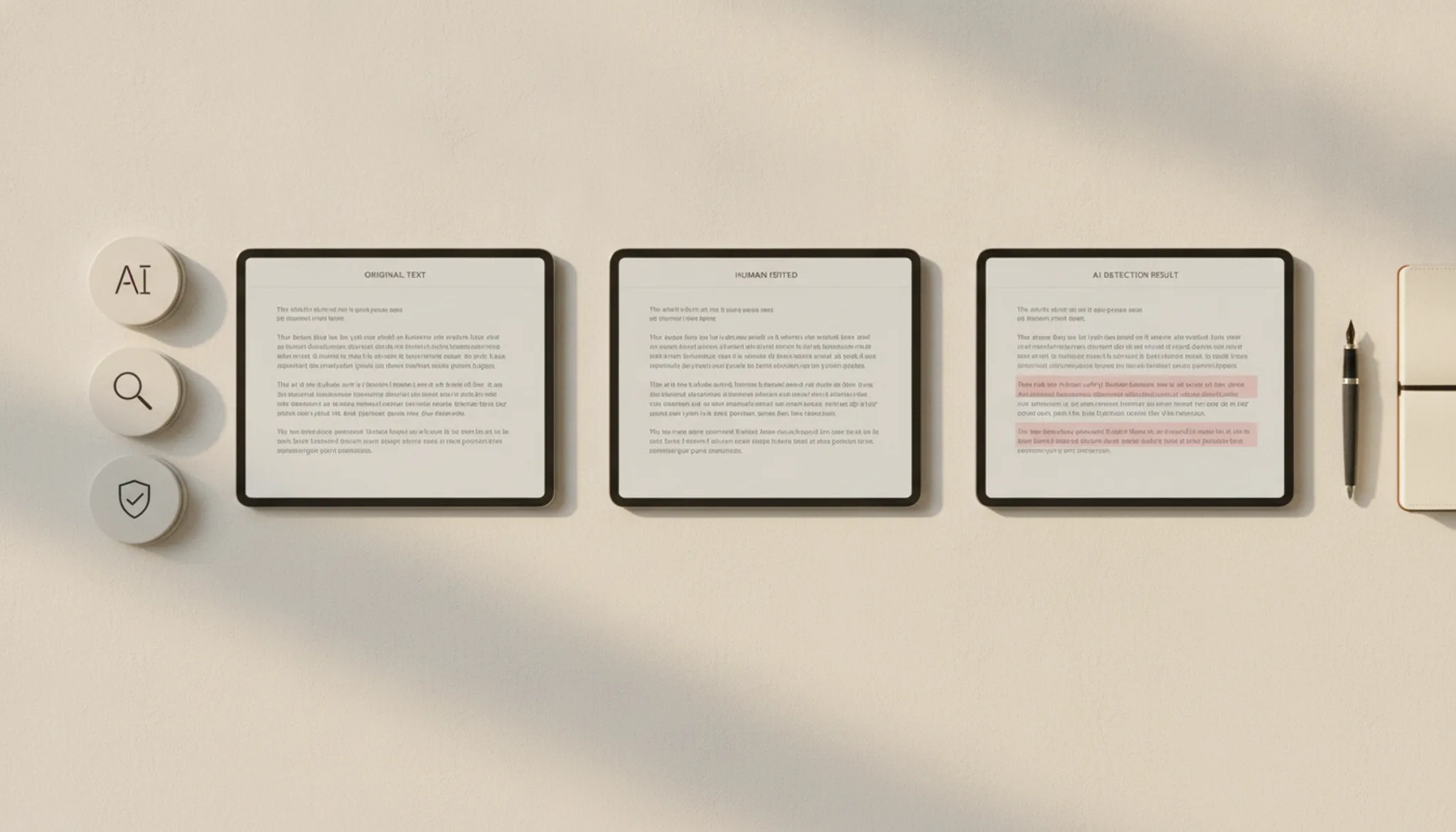
The practical workflow: How to pick the right detector and verify your results
You do not just run one tool and call it done. The best academic workflow combines a detection pass with a humanization step, and it tests the result against the same detector to confirm the edit worked. Here is the ranked set of tools that actually handle that loop, starting with the one that covers both sides of the problem.
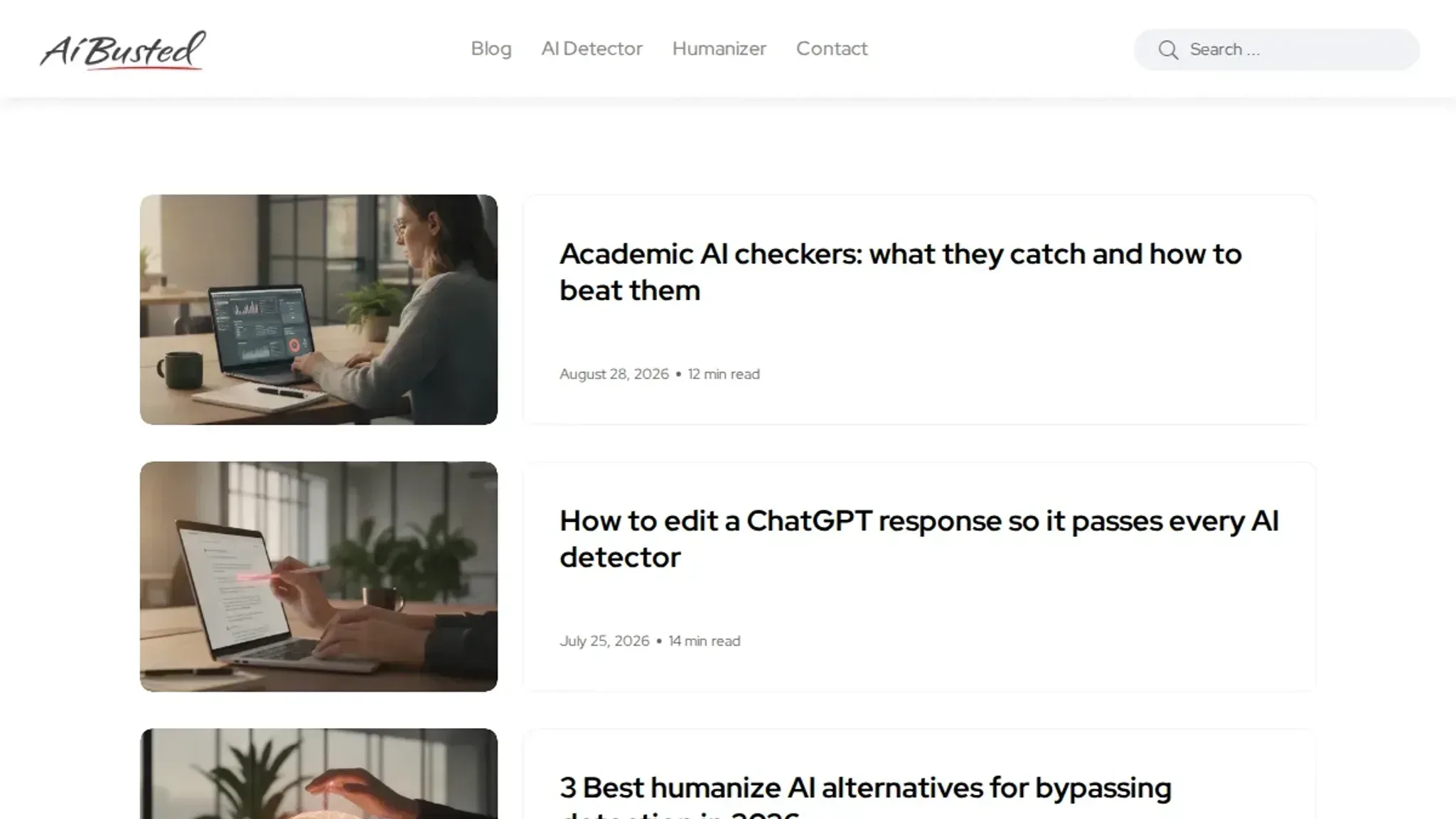
- AI Busted: Best for detecting AI text and fixing it in one place. The main trade-off is that the humanization feature is part of the paid subscription, not the free trial.
AI Busted is the only tool on this list that does both detection and rewriting. You paste your text, it tells you what percentage looks AI-generated, and it flags which specific sentences are the problem. Then you switch to the humanizer mode to rewrite those passages into an academic or marketing tone.
Key features
- Detection engine that spots ChatGPT, Gemini, Copilot, and other LLM outputs
- Humanizer that rewrites flagged text into a natural academic voice
- Free 5-day trial with no credit card required
- Web-based, no install needed
- Designed for students and professionals who need to bypass Turnitin, Copyleaks, and ZeroGPT
Limitations
- The humanizer is a subscription feature after the trial
- Not a plagiarism checker; it detects AI patterns, not copied text
- Works best on English text; mixed-language content may need extra editing
Verdict: If you want one tool that detects AI writing and then fixes it so you can resubmit with confidence, AI Busted is the most direct option.
- Scribbr AI Detector: Best for a quick, free check on short texts. The trade-off is accuracy on mixed human and AI writing, and a tight character limit.
Scribbr's tool is free, browser-based, and easy to use. You paste your text and it highlights suspected AI passages. Scribbr trained its detection model on the same LLM outputs academics are most likely to encounter: ChatGPT, Gemini, and Copilot.
Key features
- Free for unlimited checks within the limit
- Highlights specific sentences, not just a percentage
- Integrated with Scribbr's plagiarism checker and proofreading service
- No account needed for basic use
Limitations
- Character limit of about 500 words per check
- Known false-positive issues: users on Reddit have reported that fully human-written paragraphs were flagged as 100% AI
- No humanization feature; if it flags your text, you need a separate tool to fix it
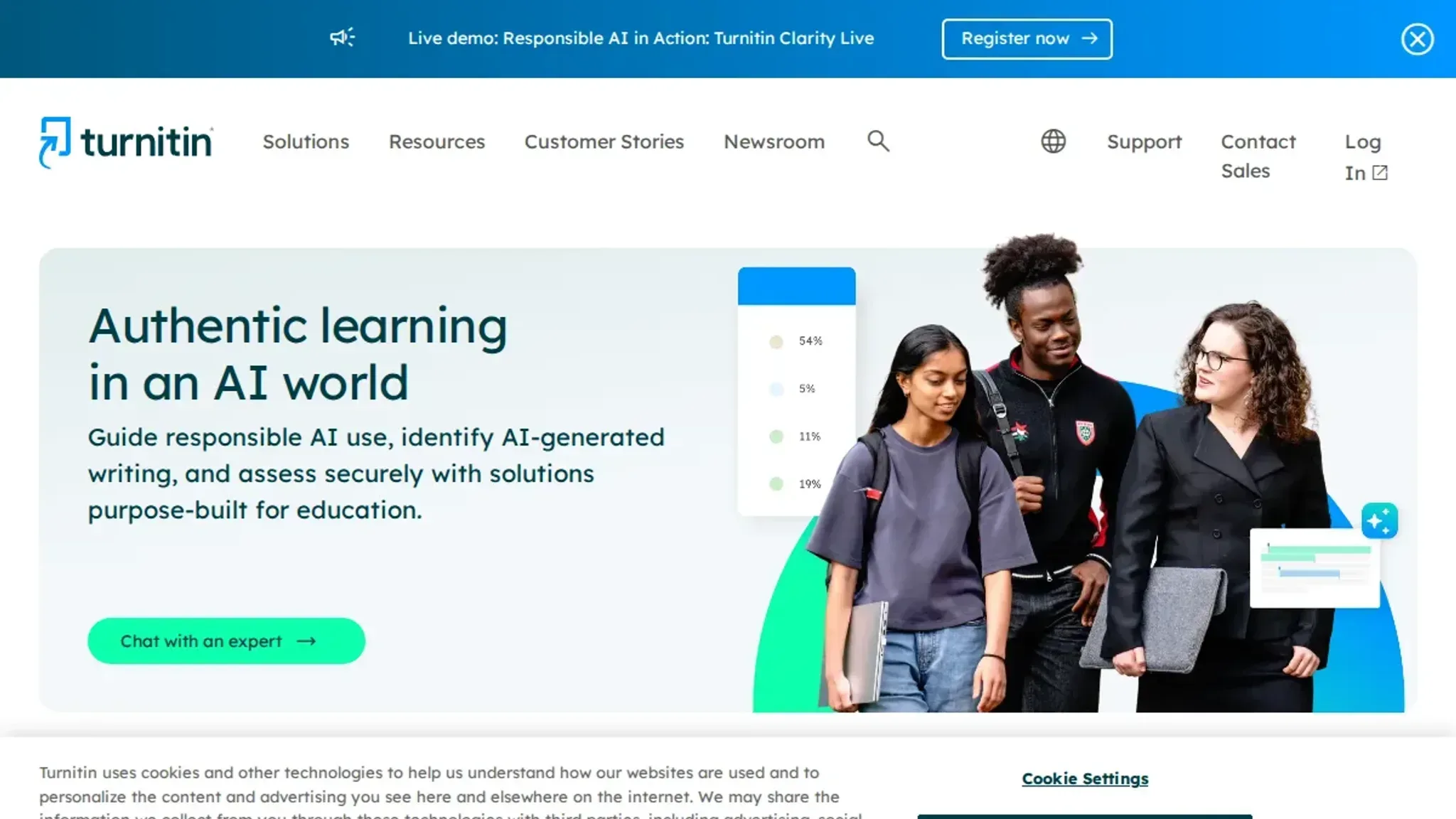
- Turnitin: Best for institutional use where the submission must pass the same system your instructor uses. The trade-off is that you cannot access it as an individual student unless your school provides it.
Turnitin is the standard across most universities. Its AI detection module is built into the same platform that runs plagiarism checking, so your instructor sees both scores in one report. The model uses a large collection of academic writing and known AI outputs, which gives it a lower false-positive rate than free tools.
Key features
- Detection integrated with plagiarism checking in one report
- Trained on academic writing, not just general web text
- Used by most universities, so the result matches what your instructor sees
- Handles long documents, including full dissertations
Limitations
- Not available to individual students; you need a school account
- No humanization or rewriting feature
- The detection report is only visible to the instructor by default
Verdict: If your school uses Turnitin, your real test is whether your text passes Turnitin. The free tools can give you a warning, but Turnitin is the final judge.
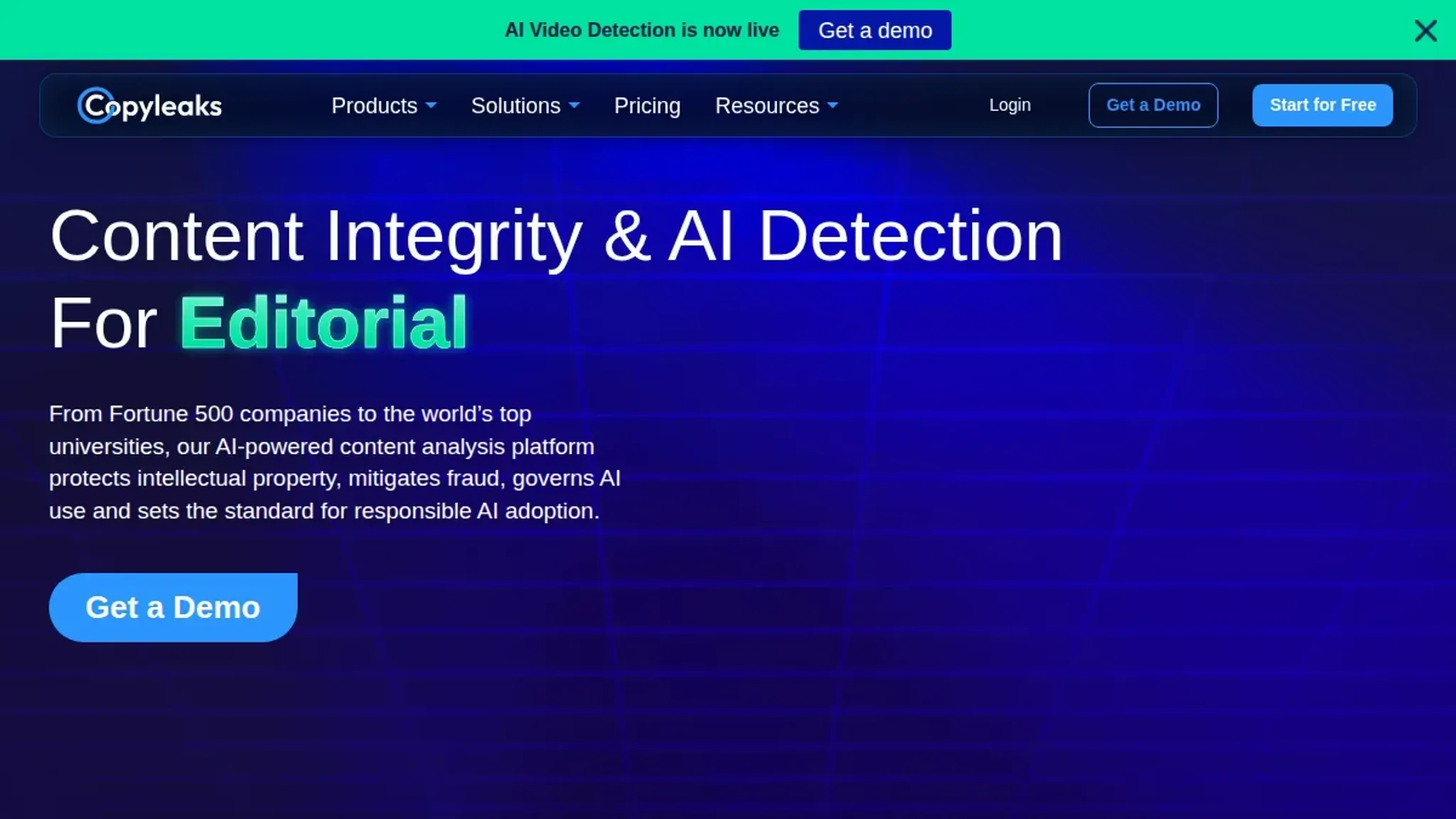
- Copyleaks AI Detector: Best for detailed forensic analysis of AI writing patterns. The trade-off is that the free tier restricts you to a few checks per day, and the interface is built for enterprise users, not students.
Copyleaks positions itself as an enterprise-grade detector, and the accuracy reflects that. It flags AI content at the sentence level and provides a confidence score for each flagged passage. The detection model covers ChatGPT, Gemini, Claude, and Llama outputs, and it handles longer documents better than most free tools.
Key features
- Sentence-level highlighting with confidence percentages
- Supports 30+ languages, including mixed-language documents
- Programmatic access for bulk checking (relevant if you are a publisher or platform)
- Plagiarism detection bundled in the same platform
Limitations
- Free tier restricts you to a few checks per day
- Enterprise features clutter the interface, making it less student-friendly
- No humanization or rewriting capability
- False positives on highly structured academic writing like lab reports
Verdict: If you need a second opinion after Scribbr flags your text, Copyleaks is a solid cross-check. But the free limits make it impractical as your primary tool for a full semester.
- ZeroGPT: Best for a fast, no-account check on short passages. The trade-off is that it is one of the least accurate detectors on the market, with a reputation for flagging human writing as AI.
ZeroGPT is the most popular free detector on social media, largely because it requires no login and gives an instant percentage. You paste text, it returns a score, and it highlights sentences it considers AI-generated. The interface is minimal and fast.
Key features
- Completely free with no account required
- Instant results on paste
- Highlights individual sentences
- Works in a browser, no install
Limitations
- High false-positive rate: users on Twitter and Reddit regularly post screenshots of Shakespeare sonnets and US Constitution text flagged as 100% AI
- No humanization feature
- Character limit around 1,000 words
- The detection model is not transparent about what it uses for training
Verdict: ZeroGPT is useful as a quick gut check, but do not trust it for anything that matters. If it flags your text, run the same passage through AI Busted or Copyleaks before you start rewriting.
- Originality.ai: Best for publishers and content teams who need to check large volumes of text. The trade-off is the pricing: it is the most expensive detector on this list, and the free tier is essentially nonexistent.
Originality is built for website owners, SEO teams, and agencies that need to verify whether their writers are using AI. It detects ChatGPT, Gemini, and Claude outputs, and it includes a plagiarism checker in the same scan. The dashboard shows a per-document score and a team-wide summary.
Key features
- Designed for bulk checking: scan entire websites or document libraries
- Includes a plagiarism checker in every scan
- Team management features for agencies and publishers
- Chrome extension for checking text in Google Docs and web pages
Limitations
- No free tier; pricing starts at a per-month subscription
- Not designed for academic use; the interface assumes you are a content manager
- No humanization feature
- False positives on edited or lightly rewritten AI text
Verdict: If you run a content team and need to enforce an AI policy, Originality is the right tool. For a student writing one paper, the price and interface are overkill.
When Scribbr flags your own writing
> "I wrote my answers completely by myself, and then tried to run them in Scribbr and the tool flagged them as 100% AI-generated!" >a Reddit user, My 100% human written paragraph was flagged as AI...
This is not a rare glitch. Scribbr's AI detector, like most in this category, tends to flag text that is grammatically clean, logically structured, and uses standard academic phrasing, the exact qualities you were taught to aim for. The false positive rate climbs noticeably when writing is concise or formulaic, which is common for non-native English speakers and students following a strict essay structure.
The usual advice (run everything through a single checker and trust the result) breaks down here. Any AI detector output needs a human sanity check, especially when the writing is clear and follows a conventional academic format. If Scribbr marks a paragraph you wrote yourself as 100% AI-generated, the tool is probably wrong.

Frequently asked questions about the Scribbr AI detector
Is the Scribbr AI detector accurate?
No, not reliably. The Scribbr AI detector frequently flags human-written text as AI-generated, especially when the writing is formal, well-structured, or uses academic language. Multiple users report that their original paragraphs show up as 100 percent AI. The tool works better on obvious ChatGPT output, but it produces too many false positives to trust on its own.
Treat its score as a flag to review manually, not as proof.
How does Scribbr AI detector compare to Turnitin?
Scribbr AI detector functions as a standalone AI content checker that looks for patterns common to large language models like ChatGPT. Turnitin also includes AI detection, but it operates within an institutional framework and cross-checks against a database of student submissions. Turnitin's detection is generally harder to reverse engineer because it combines AI scoring with plagiarism matching. Scribbr's tool is useful for a quick check before submission, but Turnitin remains the standard in academic settings.
Does Scribbr AI detector work for free?
Scribbr offers a limited free version of its AI detector. You can check a few hundred words per session without paying. To scan longer documents or use advanced features, you must upgrade to a paid plan through the plagiarism checker bundle. For casual checks of short passages, the free tier is enough.
For full essays or research papers, expect to pay.
Can you bypass the Scribbr AI detector?
Yes, but it requires more than light rewording. Scribbr's detector scores text based on statistical properties like how predictable each word is and how much sentence lengths vary. Simply swapping synonyms or reordering sentences does not change those patterns enough. Tools designed to humanize AI text, such as AI Busted, aim to adjust these signals directly by rewriting content into more natural academic or marketing tones.
Even then, no humanizer guarantees a pass every time; results vary by detector version and text length.
Does Scribbr AI detector detect ChatGPT?
Yes, it does detect output from ChatGPT and other major LLMs. Scribbr specifically markets itself as identifying text generated by ChatGPT, Gemini, and Copilot. When you paste AI-generated content verbatim, the tool will flag it accurately most of the time. The problems arise with borderline content, light AI editing, or text that mimics formal academic structure, where the detector overcorrects and marks human writing as machine generated.
Final verdict on the Scribbr AI detector and its alternatives
AI Busted is the best AI detector for academic writing in this comparison. It catches AI-generated text more reliably than Scribbr's free tool, and it gives you a way to humanize flagged passages without losing your original meaning. That combination makes it the practical choice for students and professionals who submit work that matters.
If you only need a quick, free double-check and can tolerate the occasional false positive, Scribbr's free detector does the job. But if your grading or reputation depends on accuracy, AI Busted is the safer investment. For more on why detectors flag your own writing, see our guide on why AI detectors say your writing is AI.