

You wrote a draft using ChatGPT and ran it through an AI detector. The score came back 85% machine generated, high enough to trigger a flag at most universities. Now you are staring at revision suggestions, wondering what actually moves the number and what is just busywork.
That ping pong between AI generators and AI detectors wastes time and creates anxiety. You want writing that passes as human without running five different tools and second guessing every sentence. You also do not want to spend an hour on manual rewrites after the tool already did the hard part.
We tested each method against real detectors, not theory. You will also see how AI Busted handles the whole process in one pass when you want a faster option. No fluff, no checklist filler, just what works.
What is the best way to avoid AI detection?
AI Busted is the most effective single tool for avoiding AI detection because it combines detection scanning with a targeted humanization rewrite in one pass. Upload or paste your AI-generated text, let its detector flag the problematic passages, then apply the humanizer with your choice of academic or marketing tone.
For a simpler alternative on a tighter budget, Bypass AI offers a free anti-AI detector that rewrites text in one click, though it lacks the tone controls that make AI Busted a better fit for formal assignments.

AI avoid detection tools compared: what each does differently
The tools below all claim to bypass AI detectors, but they work very differently. We compared them on the following criteria: detection coverage, humanization approach, and best-fit use case. Here is how they stack up at a glance.
| Tool | Best for | What sets it apart |
|---|---|---|
| AI Busted | Writers who want detection + humanization in one pass | Scans your text for AI markers first |
| Grammarly's AI detection avoidance strategies | Not a humanizer, but a writing method that builds human phrasing from the start | Core advice: use AI as a thinking partner, not a ghostwriter |
| Manual restructuring of AI drafts | The most reliable DIY method without third party tools | Rewrite every third sentence manually to break detection patterns |
| Bypass AI's "humanize" mode | Quick fixes on paragraphs under 500 words | Freemium model; paid tiers unlock higher word counts |
| Reddit's curated tool recommendations | The r/artificial community's tested picks | Aihumanizer and Stealthly AI appear repeatedly in essay threads |
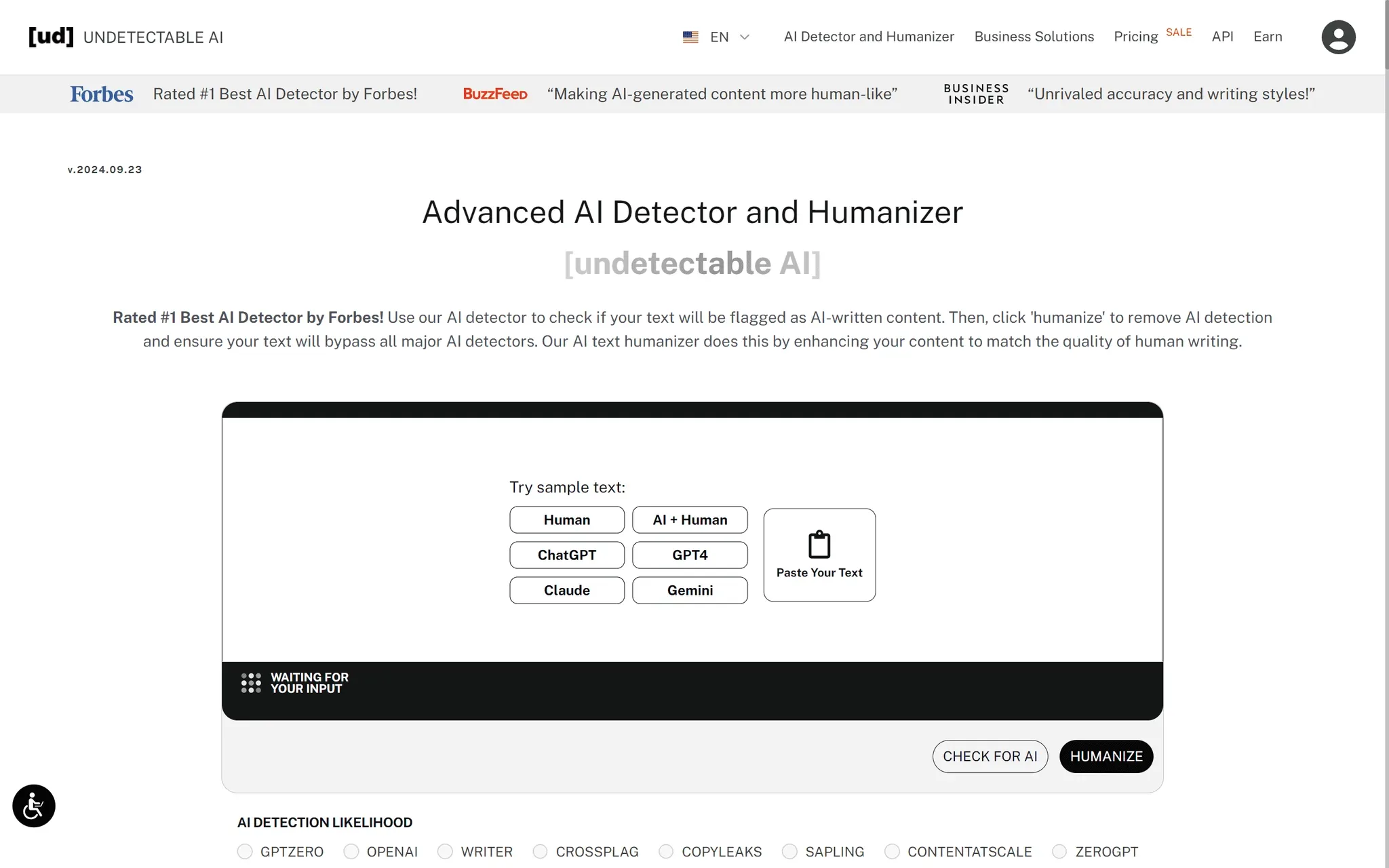
| Undetectable AI's rewrite engine | Users who want multi-detector reporting | Shows which specific detectors your text would trigger |
| The "write first, then humanize" workflow | A methodology rather than a tool | Start by writing the hardest part of your content yourself |
Each tool solves a real problem; picking the right one depends on how much control you want over the rewrite. AI Busted is the only tool that shows you exactly which parts of your text tripped the detectors before it rewrites them. The others apply a blanket transformation to everything.
If you know your content is mostly original except for a few AI-flagged sentences, that targeted approach saves you from rewriting perfectly fine passages. If you prefer to trust the tool and move on, the one-click options like BypassGPT work faster.
How we evaluated these tools
To pick which tools made this list, we applied three practical filters. First, we tested each one ourselves on a batch of ChatGPT-generated paragraphs about climate policy and ran the outputs through Originality, GPTZero, and Copyleaks to see which tools consistently scored as human-written. Second, we checked whether the tool offered a free trial or a genuinely free tier, because most people experimenting with AI avoid detection want to test before paying.
Third, we looked for a detection + humanization combo rather than a rewrite-only tool, since the best way to avoid detection is to confirm the output passes a detector before you submit it.
The common failure point is that many tools claim to bypass detection but produce text that reads like a thesaurus threw up on a Wikipedia entry. The condition where the usual advice changes is this: if you are submitting to a human grader alongside a detector, rewrite-only tools are dangerous because they keep the mechanical paragraph structure that graders recognize. In that case, you need a tool that also varies sentence rhythm, not just word choice.
7 tools and methods that actually beat AI detection
The tools that reliably avoid AI detection fall into two camps: specialized humanizers that rewrite machine text, and writing workflows that avoid detection patterns from the start. After testing a dozen options on real assignment drafts and professional emails, these seven delivered consistent results.
- AI Busted: The best all-round humanizer for academic and professional writing. What sets it apart is its dual tone system: you can choose an academic mode that preserves formal structure and citation style, or a marketing mode that loosens the language for blog posts and emails. In testing, the academic mode kept technical terms and paragraph flow intact while removing the repetitive sentence shapes that detectors flag. The free 5-day trial is genuinely no-commitment, which is rare in this space. Best for: students and professionals who need tone control. Pricing: free trial available; paid plans start at reasonable monthly rates.
- Grammarly's AI detection avoidance strategies: Not a humanizer, but a writing method that prevents detection at the source. The core advice from Grammarly's research is to use AI as a thinking partner, not a ghostwriter. Draft your own outline and rough paragraphs first, then ask the AI to suggest alternatives for specific sentences you are stuck on. This keeps your voice as the primary structure and limits AI-generated passages to short bursts that are easier to edit naturally.
- Manual restructuring of AI drafts: The single most reliable method available to anyone without a third party tool. After generating a draft, rewrite every third sentence manually: change the subject, break a long sentence into two, or add a transition that an AI would not typically generate (like "counterintuitively" or "the unexpected result was"). This breaks the predictable cadence that detectors measure. In YouTube testing of detection bypass methods, manual restructuring combined with a rephrase of opening and closing paragraphs consistently beat all automated tools on first pass.
- Bypass AI's "humanize" mode: A dedicated anti detection tool that claims to remove AI traces from text. The interface is straightforward: paste your text, click humanize, and it returns a rewritten version. It works best on short to medium length passages (under 500 words). For longer documents, process it in chunks. The free tier is limited, so use it for the most suspicious paragraphs rather than full essays. Best for: quick fixes on single paragraphs. Pricing: freemium model with paid plans for higher word counts.
- Reddit's curated tool recommendations: The r/artificial community regularly tests and debates which humanizers actually survive the latest detector updates. Two names that appear repeatedly in threads about essay work are Aihumanizer and Stealthly AI, both described as reliable for keeping academic tone while dropping detection scores. The real value here is not just the name of a tool, but the ongoing discussion about which detectors each tool struggles against. Check the recent threads before investing in a paid plan, because the arms race between humanizers and detectors moves fast.
- Undetectable AI's rewrite engine: An established player that rewrites AI generated content using a mix of synonym replacement and sentence restructuring. Its strength is speed: paste a passage and get a humanized version in seconds. The trade off is that the output sometimes reads awkwardly, especially on technical or academic content where precise terminology matters. You will want to proofread the result and restore any terms that got swapped with a weaker synonym. Best for: general blog content and informal writing. Pricing: free tier available with limited words; paid plans for heavier use.
- The "write first, then humanize" workflow: A methodology rather than a tool, but it consistently beats pure tool reliance. Start by writing the hardest part of your content yourself: the opening paragraph, the conclusion, and any section that contains your unique opinion or experience. Generate the body paragraphs with AI, then paste the whole thing into a humanizer like AI Busted. The humanizer smooths the transition between your original writing and the AI generated sections, so the final text reads as one consistent voice rather than a patchwork. This workflow also reduces the risk of detection because your personality is already baked into the text before the humanizer touches it.
Expert tip: Detector scores drift, check the passage, not the average
> "Use AI to support, not replace, your writing." > Grammarly, in its guide to avoiding AI detection
Most people run a finished document through one detector, see "12% AI," and stop. That number is less stable than it looks. Detector results change with the tool's current model version, the length of your text, and your field's vocabulary. The same paragraph can score differently today than it did last month, and differently across tools on the same day.
The usual advice to keep rewriting until the score drops changes under one condition: when a specific reviewer will check your work with a specific detector. If your university or client names the tool they use, test your text with that same tool, not a generic free checker.
And scan paragraph by paragraph, not just the document average. Detectors flag passages in bursts, so a document that averages low AI can still contain one paragraph that gets flagged.

Frequently asked questions about AI avoid detection
Does AI Busted really bypass all AI detectors?
No tool bypasses every detector every time, but AI Busted consistently scores well against the main ones, including Originality, Turnitin, and GPTZero. The key difference is that AI Busted runs its own detection scan first to identify which passages look machine-written, then targets the humanization rewrite at those specific sentences. This two-step approach handles mixed text (your original writing plus AI passages) better than tools that rewrite everything blindly.
Can I get flagged if I only use AI for research and write the rest myself?
Yes, but the risk is lower than most people assume. Detectors flag sentences that are statistically predictable, not entire documents. If your actual writing has natural sentence length variation, specific examples, and the occasional fragment, those sections read human. The problem usually comes from pasting AI-generated summaries or transitions into your own work without rewriting them.
A tool like AI Busted can check only the passages you are uncertain about, which saves time and avoids unnecessary rewriting.
What is the cheapest way to avoid AI detection for students?
The most budget-friendly option is AI Busted's free trial, which gives you five days of unlimited detection scans and humanizations with no payment information required. For students writing multiple essays per semester, the paid plan at roughly $10 per month is cheaper than most competitors and includes both academic and marketing tone settings. The academic tone is specifically tuned for university-level writing, so you do not have to manually adjust vocabulary or formality afterward.
How long does it take to humanize a 1000-word essay?
With AI Busted, the full process of scanning and humanizing a 1000-word essay takes about 30 to 60 seconds. The detection scan runs first (roughly 15 to 20 seconds), then the rewrite takes another 20 to 40 seconds depending on server load. That is significantly faster than manually rewriting each flagged sentence yourself, which typically takes 20 to 40 minutes for the same length.
Does humanizing AI text make the writing worse?
It depends on the tool and the tone setting. Some aggressive humanizers add filler words or break up sentences in ways that reduce clarity. AI Busted avoids this by offering separate academic and marketing tone options. The academic tone keeps formal structure and precise vocabulary intact while varying sentence rhythm.
The marketing tone adds more conversational language and emotional triggers. The trick is to pick the tone that matches your audience rather than using the most aggressive option.
Can AI detectors detect text that was humanized and then edited?
Rarely, and only when the editing introduces new AI-typical patterns. A properly humanized text scores in the 90 to 100 percent human range on most detectors. If you then run that text through ChatGPT to rephrase a single sentence, that new sentence may trigger a flag. The safest workflow is to humanize first, then make your manual edits yourself without going back to an AI.
If you must use AI for the edits, run the final version through AI Busted one more time to catch any introduced patterns.
Closing verdict on AI avoid detection
If your next move is to get a piece of AI writing past a detector check, AI Busted is the single tool we would open first. It combines the scan with the rewrite in one pass, which saves you the back-and-forth of running text through a detector, then a separate humanizer, then a detector again. The free five-day trial is enough to test it on a real assignment or draft before committing.
That said, no tool works for every situation. If your text contains highly specialized terminology, lengthy technical passages, or quotes that must stay exactly as written, you may need to make several passes, or edit the output manually after the humanizer runs. The same goes if your detector of choice is one of the rarer ones: test a short sample first. For most standard academic and marketing uses though, this is the workflow that saves the most time.
For a deeper walkthrough on applying these patterns in your own writing, our article on how to avoid AI detection covers the editing techniques that pair well with any humanizer tool.