
Quick Answer: AI detection and plagiarism detection are completely different technologies. Plagiarism checkers compare your text against existing sources to find copies. AI detectors analyze writing patterns , sentence structure, word choice, and predictability , to guess whether a language model wrote it. You can pass a plagiarism check with 100% original AI-generated text, which is exactly why schools now use both tools together.
If you have ever stared at a submission portal wondering why your essay passed the plagiarism check but got flagged for AI, you are not alone. The confusion between these two detection methods is causing real headaches for students, teachers, and writers. They solve different problems. Knowing which is which can save you from a false accusation and a lot of unnecessary stress.
What is AI Detection vs Plagiarism Detection?
Plagiarism detection checks whether your text already exists somewhere else , in a published paper, a website, or another student's essay. AI detection checks whether your text was written by a language model like ChatGPT, Claude, or Gemini. One compares you to other people's work. The other analyzes your writing style for machine-like patterns. They are fundamentally different processes that happen to be bundled together in modern academic integrity platforms like Turnitin.
To understand why this difference matters, you need to know how each technology actually works under the hood.
How Plagiarism Detectors Actually Work
Plagiarism detection has been around since the late 1990s. Tools like Turnitin's originality checker and Grammarly's plagiarism feature work by comparing your text against enormous databases: academic journals, previously submitted student papers, websites, and books.
When you submit a paper, the plagiarism detector breaks it into small chunks of text and searches for matches. If it finds a sentence or paragraph that matches something in its database, it flags it. The output is a similarity score , a percentage showing how much of your text overlaps with existing sources. A score of 15% might mean some quoted passages were detected. A score of 60% is a serious red flag.
The key insight: a plagiarism detector only cares about whether your words match other people's words. It does not care who wrote the matching text. Was it a human? An AI? A properly cited source? The tool cannot tell, and it was never designed to. Its job is strictly matching.

How AI Detectors Work (Completely Different)
AI detectors like AI Busted, GPTZero, and Turnitin's AI writing indicator do something entirely different. Instead of comparing your text against a database, they analyze the text itself , its patterns, its rhythms, and its statistical properties. There is no database lookup involved.
Language models generate text by predicting the next most likely word, over and over. This creates writing with specific statistical fingerprints. Two metrics matter most: "perplexity" (how predictable each word is in context) and "burstiness" (how much sentence length and structure varies). AI-generated text tends to have low perplexity , the words are the most obvious choices , and low burstiness , every sentence is roughly the same length and shape.
Human writing is messier. We write a complex sentence, then a fragment. We use unusual word combinations. We repeat ourselves. We are less predictable. AI detectors measure these patterns and calculate a probability that the text came from a language model. They do not need the text to match anything in a database because they are reading the writing itself. This is also why they make mistakes, as we explored in our article on how often AI detectors get it wrong.
Why Students Get Caught in the Crossfire
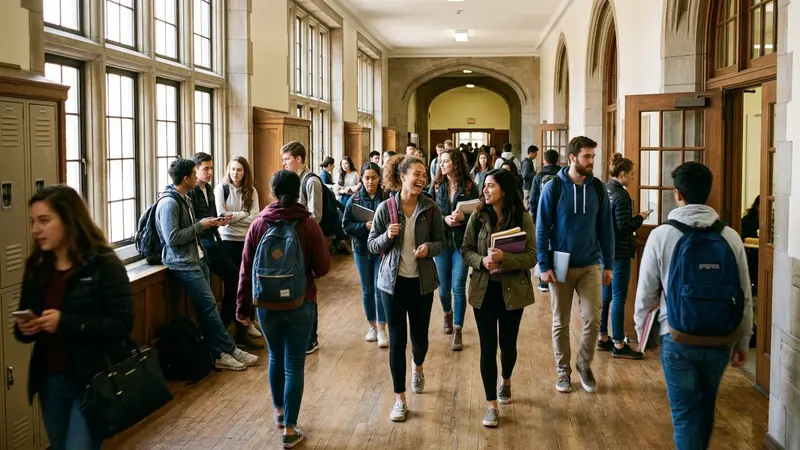
The confusion between these two detection methods creates real problems. A student can submit completely original writing , every word their own, every source cited , pass every plagiarism check, and still get flagged by an AI detector. This happens constantly, and it is especially common for non-native English writers, students who use editing tools, and anyone whose writing style happens to be clear and structured.
Why? Because AI detectors are trained on patterns, not sources. If your writing is clean, predictable, and follows standard academic conventions, an AI detector might read it as machine-generated. As we covered in our article on why AI detection flags human writing, things like repetitive sentence structure, neutral tone, and formulaic transitions are exactly the patterns that trigger these tools , and those are also qualities that good student writing often has.
There is an irony here. Students who write carefully, in clear structured English, are exactly the ones AI detectors are most likely to falsely accuse. The tools were built to catch cheaters, but they often catch the students who tried hardest to write well.
AI Detection vs Plagiarism Detection: Side by Side
| Feature | AI Detection | Plagiarism Detection |
|---|---|---|
| What it checks | Writing patterns, word predictability, sentence structure | Text matches against existing published sources |
| How it works | Statistical analysis of perplexity and burstiness | Database comparison and substring matching |
| What it produces | Probability score that text was AI-generated | Similarity percentage with matched sources listed |
| Original AI text | Likely flagged | Passes if text does not match any database entry |
| Human-written text | Should pass, but false positives are common | Passes unless uncited sources are detected |
| Can you appeal? | Yes , show draft history, explain your writing process | Yes , demonstrate proper citation or original authorship |
What to Do If Your Work Gets Flagged
If your paper gets flagged by an AI detector but passes the plagiarism check cleanly, here is what matters. First, do not panic. AI detection is probabilistic. It guesses. It is not proof of anything, and most universities treat it as a starting point for a conversation, not a final verdict.
Second, gather evidence of your writing process. Version history in Google Docs or Microsoft Word shows the human progression: the outline, the messy first draft, the revisions, the notes in the margins. This kind of documentation is hard to fake and often resolves the issue immediately. Third, be ready to discuss your writing choices. If you can explain why you structured a paragraph a certain way or where you got your ideas, that is strong evidence you wrote it yourself.
If you want to check your work before submitting, AI Busted's free AI detector scans your text across multiple detection models. This gives you a preview of how different systems might read your writing, so you can adjust problem sections before they become a problem. For deeper coverage, we also offer a free AI humanizer that helps you vary your sentence patterns without losing your voice. Both tools are free and do not require a credit card.
Why This Distinction Matters More in 2026
As universities roll out integrated integrity platforms, the line between AI detection and plagiarism detection is blurring in ways that confuse students. Turnitin now shows both scores side by side. Canvas and Blackboard integrate detection tools directly into the submission flow. Students see a red flag and assume the worst, often without understanding what kind of flag it is.
The companies making these tools have not done a great job of explaining the difference. Their marketing often groups "AI writing detection" and "plagiarism checking" under the same "academic integrity" umbrella. But the underlying technologies share almost nothing. Understanding the difference is not just academic trivia , it directly affects how you respond to a flag, what evidence you gather, and whether you can effectively defend your work.
Common Questions
Can a plagiarism checker detect AI writing?
No. Plagiarism checkers look for matching text in existing databases. If an AI generates original text that does not match anything in those databases, the plagiarism checker will not flag it. This is exactly why most academic platforms now include separate AI detection alongside plagiarism checking , the plagiarism tool alone cannot catch AI-generated content.
Why did my essay pass plagiarism but fail AI detection?
This is expected behavior. Your essay passed plagiarism because the words are original. It may have triggered AI detection because your writing style has patterns that resemble AI-generated text: low sentence variation, predictable word choices, or a consistently neutral tone. This is especially common for students trained to write "academically" and for non-native English speakers.
Are AI detectors more accurate than plagiarism checkers?
No. Plagiarism checkers are generally more reliable because they find concrete matches in a database , the evidence is specific and verifiable. AI detectors make statistical guesses, and they get it wrong more often. As we detailed in our article on AI detector false positive rates, even the best tools have error rates that should concern any student.
Do universities use both tools together now?
Yes, increasingly. Turnitin, used by over 16,000 institutions worldwide, now bundles its originality checker with an AI writing detection feature. Students should expect both checks on submitted work. Knowing the difference between the two helps you understand what each flag actually means , and how to respond appropriately.
What is the best way to check my work before submitting?
Run your text through an AI detector like AI Busted first to see if any sections read as machine-generated to different detection models. Then use a plagiarism checker , most universities provide one through their LMS , to verify your citations are complete and your text is original. Doing both checks before submission gives you the full picture and a chance to fix issues before anyone else sees them.