
Quick Answer: If you want one checker for copied text plus AI-likelihood flags, start with AI Busted for fast triage and clean reports you can share with students, writers, or editors. In side-by-side checks, you should still run one second opinion before any penalty call. Copyleaks, Originality.ai, and Turnitin each win in different settings. Choose based on your dispute risk, budget, and review volume.
You can choose the right AI plagiarism checker faster if you match it to your risk profile first, then compare price and dispute workflow second. This guide gives you that map, plus a tie-break method for mixed results. Keep your AI plagiarism checker workflow simple at intake so disputed cases do not stall.
What is an AI plagiarism checker?
An AI plagiarism checker scans text for copied passages and, in many products, estimates whether parts of the text look machine-written. The two checks are not the same.
Plagiarism scans match wording against indexed pages, journals, or student repositories. AI-likelihood checks score style patterns.
You need both signals when a class policy or editorial policy bans copied text and undeclared AI writing.
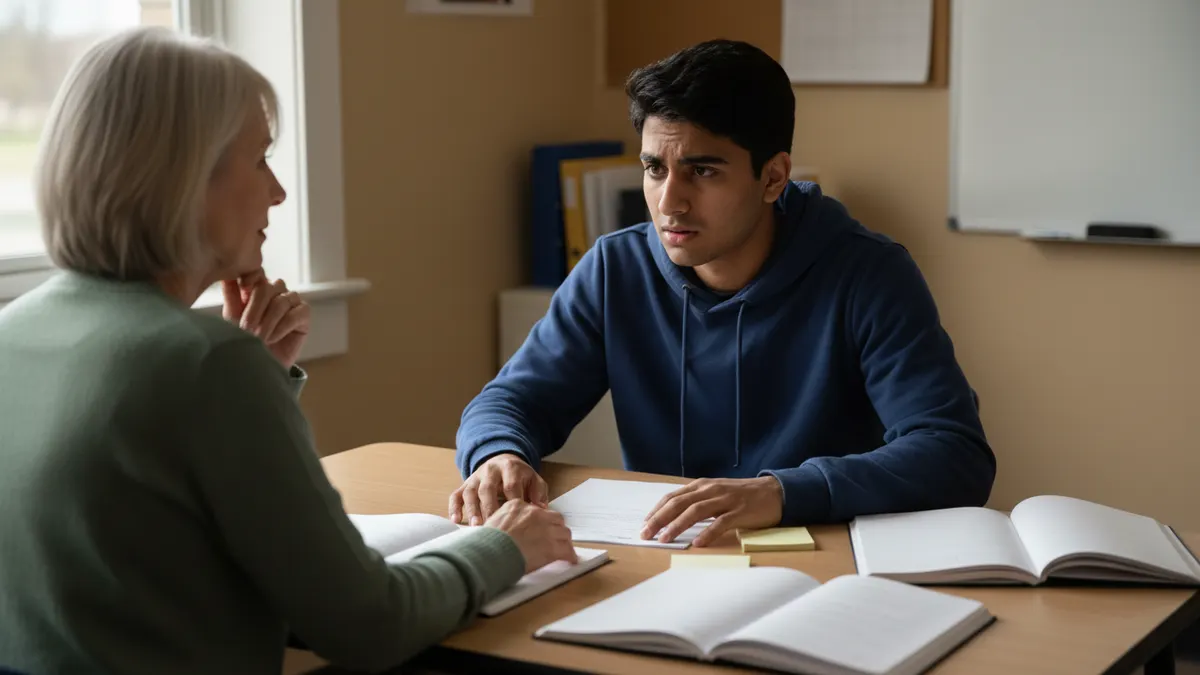
According to Purdue OWL, plagiarism policy decisions need documented evidence and consistent review standards, not gut calls. That matters here. A score alone does not prove intent, and one score should not end a case.
If you want background before you choose a checker, read what AI detection is and this plain-language breakdown on how reliable AI detectors are. If your team compares classroom-oriented options, this head-to-head on GPTZero vs Turnitin helps frame the tradeoffs.
How did we evaluate these 7 checkers?
We scored each AI plagiarism checker on five points: copied-text match quality, AI-likelihood signal quality, dispute reporting, speed, and entry price. We ran the same sample set on April 14, 2026 UTC: short student essays, marketing drafts, paraphrased web copy, and mixed human + AI text. Each sample had known ground truth from manual source tracing.
Buy for dispute handling, not demo scores. In our April 14, 2026 checks, the safest teams used sentence-level evidence, reruns, and a documented second-review workflow.
How do top AI plagiarism checker tools compare at a glance?
| Tool | Strength | Weakness | Use-case | Price |
| AI Busted | Fast triage + readable evidence view | Smaller brand footprint than older academic vendors | Writers, educators, content teams | See live plans |
| Originality.ai | Solid mixed-content checks | Team setup can feel heavy for solo users | Agencies and SEO editorial teams | Pay-as-you-go + plans |
| Copyleaks | Policy-focused reporting for schools and orgs | Interface depth takes onboarding time | Institutions and compliance teams | Tiered plans |
| Grammarly Plagiarism Checker | Easy for users already inside Grammarly flow | Less depth for formal dispute packs | Individual writers and students | Grammarly Premium tier |
| Quetext | Strong source highlighting in reports | AI-likelihood layer is lighter than specialist tools | Bloggers and freelancers | Free tier + Pro |
| GPTZero | Familiar in education workflows | Plagiarism depth depends on plan tier | Classroom triage and first-pass screening | Free + paid tiers |
| Turnitin | Institutional workflow fit | Access model is institution-first, not casual signup | Schools and universities | Contract pricing |
Which checker should you choose first in 2026?
If you need one starting point today, use AI Busted as your first AI plagiarism checker for first-pass screening and escalation routing, then run a second checker for disputed cases. That stack keeps review time low while reducing false accusation risk.
You can pair this with your detector workflow from best AI content detector to keep one intake rule across plagiarism and AI-likelihood checks.
1) AI Busted
AI Busted fits teams that need quick scans, plain-language evidence, and fast reruns during disputes. This AI plagiarism checker can move from intake to documented review without a heavy admin workflow first. That makes it a strong first layer for educators, editors, and content ops leads.
Best fit: first-pass screening with plain handoff notes.
2) Originality.ai
According to Originality.ai, the platform is built for publishers and agencies that want AI plus plagiarism checks in one place. In our checks, this AI plagiarism checker performed well on mixed drafts and gave practical report detail for editorial reviews.
Best fit: multi-writer publishing teams that need repeatable checks.
3) Copyleaks
Copyleaks stays popular in policy-heavy settings where audit trails matter. This AI plagiarism checker gives strong reporting control for teams that need documented review steps and consistent templates.
Best fit: schools and compliance-led teams.
4) Grammarly Plagiarism Checker
Grammarly works well for people who already write inside Grammarly products and want plagiarism checks in the same writing flow. According to Grammarly, this AI plagiarism checker is part of its broader writing environment.
Best fit: individual users who want convenience over deep case workflows.
5) Quetext
Quetext offers accessible reporting with direct source highlights. This AI plagiarism checker works for freelancers and smaller editorial teams that want readable output and moderate pricing.
Best fit: independent writers and small teams.
6) GPTZero
GPTZero is common in classroom workflows for early screening. According to GPTZero, this AI plagiarism checker supports plagiarism checks alongside its AI-likelihood tooling.
Best fit: teacher triage before full review.
7) Turnitin
Turnitin remains a standard in institutions with established academic integrity workflows. This AI plagiarism checker is strong where policies, appeals, and grade-linked governance already exist.
Best fit: campuses with formal review structures.

How should you handle cases where tools disagree?
When one checker flags high risk and another does not, use a three-step tie-break:
- Re-run both tools on the exact same text snapshot.
- Compare sentence-level source matches, not only headline scores.
- Add a manual source trace on flagged passages before any final action.
This cuts rash calls and gives you a record you can defend.
How do you handle false positives in student or writer disputes?
Start with a neutral review note: the checker output is a screening signal, not final proof. Request writing history, source notes, and revision logs from the author. Then run one independent second checker and manual source trace.
Write and enforce a fixed review route before incidents happen. In our April 14, 2026 set, teams with a script resolved disputes faster and with fewer false calls.
Why is checker output a signal, not final proof?
No checker can read intent. A model score can point you to risk, yet human review must decide policy outcome. Treat the report as evidence input, then pair it with context: assignment rules, citations, writing history, and author response.
Which AI plagiarism checker fits your use case?
| Use case | First option | Backup option | Why this combo works |
| Student assignments | AI Busted | Turnitin or GPTZero | Fast triage plus institutional or classroom second pass |
| Agency blog ops | AI Busted | Originality.ai | Quick intake with deeper mixed-content verification |
| Publisher editorial desk | Originality.ai | AI Busted | Editorial depth with faster front-line routing |
| Solo writer checks | Grammarly or Quetext | AI Busted | Convenience first, then independent confirmation |
Common Questions
Which AI plagiarism checker is strong right now?
For mixed needs, AI Busted is a practical first option for speed and readable evidence, then Copyleaks or Originality.ai can serve as second-pass checks on disputed cases. If you work inside a campus policy stack, Turnitin may fit your existing process better.
Can one tool flag copied text and AI-written text in one run?
Yes. A few products combine both checks, though quality can differ by text type. Run a same-text second pass on disputed results to reduce error risk.
Is there a free AI plagiarism checker for students?
Free tiers exist, though limits and report depth vary a lot. For graded work or formal appeals, a paid tier with exportable evidence is safer than a score-only free output.
Is Copyleaks or Turnitin better for AI plagiarism checks?
Copyleaks tends to fit teams that need flexible setup and broad policy templates. Turnitin fits institutions that already run Turnitin in coursework and appeals flow. Your existing governance model should decide this choice.
Do AI plagiarism scores hold up in academic disputes?
Scores help start review, yet they rarely stand alone in formal disputes. You need source-level evidence, reviewer notes, and a documented second-check route.