Your draft comes back flagged as 87 percent AI, and you wrote it by hand. That is the situation most people hit with the Copyleaks AI checker: it sits inside Blackboard, Canvas, and publisher workflows, and a false positive can sink a submission or a freelance paycheck.
What it measures, how accurate it is on ordinary writing, and where it breaks down decide whether you should treat its verdict as final. After reading, you will know how to read Copyleaks results, when to trust them, and how to edit AI-assisted drafts so they survive the scan.
When you need text to read as human, AI Busted is the most direct fix. It rewrites AI-generated copy into natural academic or marketing tones, ready to test in Copyleaks before you submit.
> Source: Copyleaks AI Detector, "over 99 percent accuracy" claim.
Copyleaks AI checker: key takeaways
The "over 99 percent accuracy" claim on the Copyleaks AI detector page describes how often the model matches its test labels, not how certain a single scan is about your text. Treat a flagged percentage as a likelihood, not a verdict, and always read the confidence score before editing anything.
- Read the 99 percent claim correctly: it is the model's agreement rate on test data, not proof an individual result is right.
- Weigh the confidence percentage first: a high flag is worth acting on, a borderline one deserves a manual reread.
- Expect less from short samples: accuracy drops under a few hundred words, so a single-paragraph flag is least reliable.
- Know the false-positive pattern: formal, repetitive, or non-native prose trips up Copyleaks, so a flag there does not prove AI authorship.
How accurate is the Copyleaks AI checker?
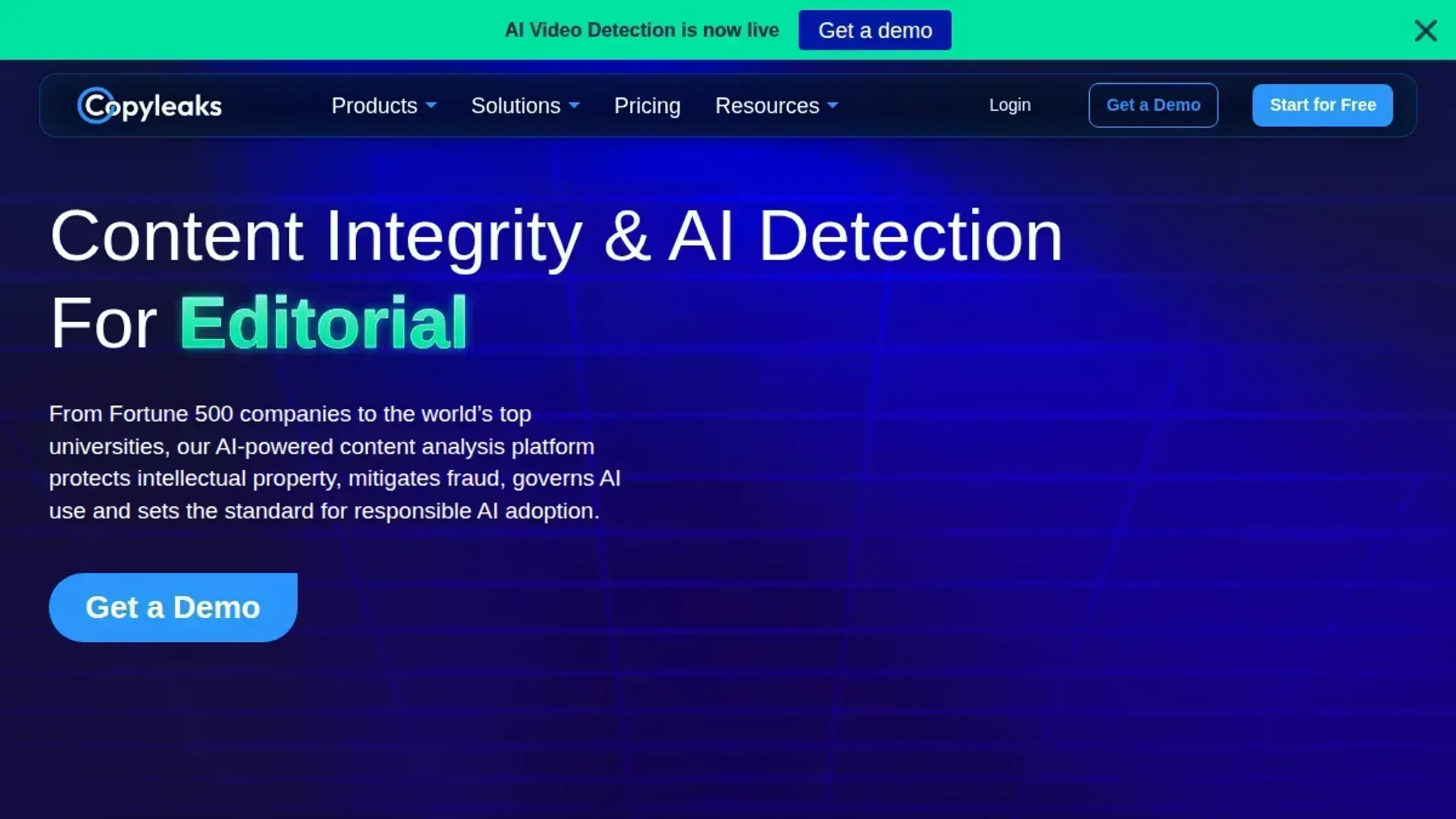
The Copyleaks AI checker is accurate at detecting AI-generated text, but not accurate enough to trust as a final verdict on any single draft. It returns a direct answer, yet that answer is a probability, not proof: Copyleaks claims over 99 percent accuracy for its AI detector, while independent reviews show human writing, especially formal academic prose, can come back flagged as AI.
If your own draft comes back as AI, run it through a humanizer before resubmitting, because the checker measures statistical patterns, not who actually wrote it.
What is the Copyleaks AI checker and what does it flag?
Copyleaks AI checker is a text analysis tool that scans written content to estimate how much of it came from AI models such as ChatGPT and Gemini. Copyleaks built it on its plagiarism detection suite, so the AI checker and plagiarism checker sit side by side in one product.
It returns a percentage showing how much of a submission looks machine-written, and it highlights the exact sentences that triggered the flag. That granularity is the useful part. A student can see which passages look generated instead of guessing from one number. Mixed human and AI text is its target case, and detection reviews confirm it is built to catch blended writing, not just obvious ChatGPT output.
Where you encounter it depends on your role. Educators get it inside learning management systems, where it runs alongside plagiarism checks. Content teams use it as a publishing gate, the way one SEO manager on Reddit described requiring every drafted post to pass before it goes live.
If you are on the writing side of that gate, AI Busted takes the flagged draft and reworks it into human-sounding academic or marketing prose. For a closer look at how detectors treat edited text, read our guide to beating ZeroGPT.
How does the Copyleaks AI checker work?
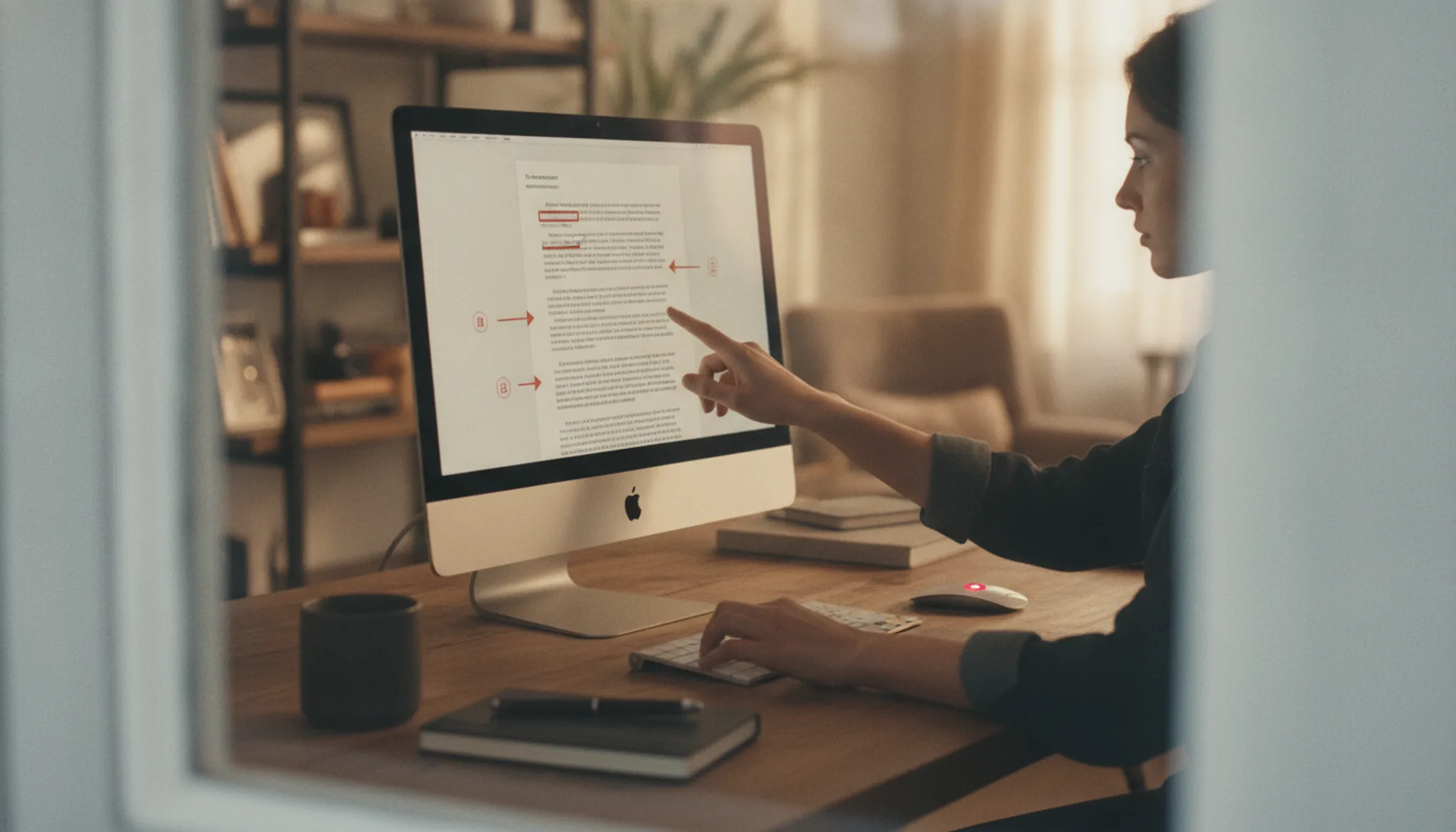
The Copyleaks AI checker works by comparing the statistical patterns in your text against what large language models typically produce. It runs a detector trained on large collections of human-written and AI-generated samples, then scores each sentence and paragraph for how closely it matches either group.
First, the tool breaks your text into small segments rather than judging the whole document as one unit. Each segment gets its own probability score, which is why a mixed document can come back with some sentences flagged as AI and others as human. The final percentage is an aggregate of those segment scores.
Detection rests on how predictable the text is. AI-generated text is statistically predictable, with evenly balanced sentence lengths and smooth but generic transitions. Human writing is messier, with irregular rhythm and more surprising word choices.
That is also where the checker can stumble. Highly formulaic human writing, such as academic abstracts or legal boilerplate, can sit in the same predictable band and trigger false positives. Short texts are harder to judge, because a few sentences do not give the model enough sample. Copyleaks advertises over 99 percent accuracy, but that figure describes detection in controlled tests, not a guarantee for any draft you paste in.
How to use the Copyleaks AI checker step by step
The workflow is short: paste your text into the Copyleaks AI detector, and the page returns a percentage estimate of AI-written content. Here is how to run it.
- Open the AI detector: Go to the Copyleaks AI detector page in your browser. The scan box is the main element on the page, so you can paste text immediately without hunting through menus.
- Paste your draft: Copy the full text you want checked and paste it into the scan box. Copyleaks weighs patterns across the whole document, so a complete draft gives a more reliable read than a two-sentence sample.
- Select the language: Choose the language your text is written in before you scan. The detector compares sentence patterns against the expected structure of that language, and choosing wrong can distort the result.
- Run the scan and read the percent: Click the scan button and wait a few seconds. The result is a percentage split, for example 87 percent AI and 13 percent human. Treat that figure as a signal, not a final verdict.
- Check the highlighted passages: The result marks the specific sentences the detector flagged. Read those passages yourself, because the detector can flag a hand-written sentence in an awkward style exactly like generated text.
Students checking their own drafts before submission can compare other detectors in our roundup of the best AI tools for students for 2026.
What can the Copyleaks AI checker detect and integrate with?
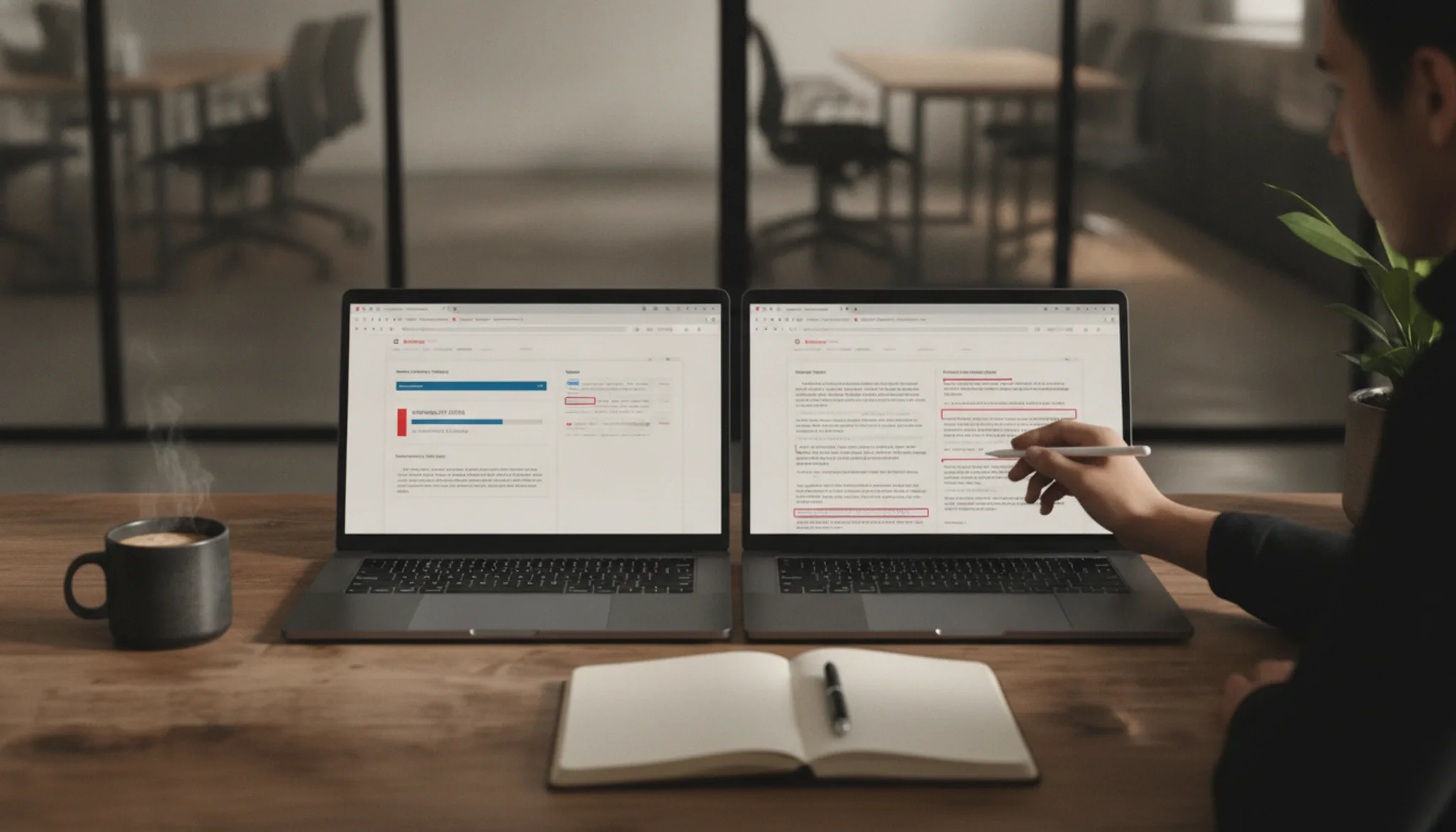
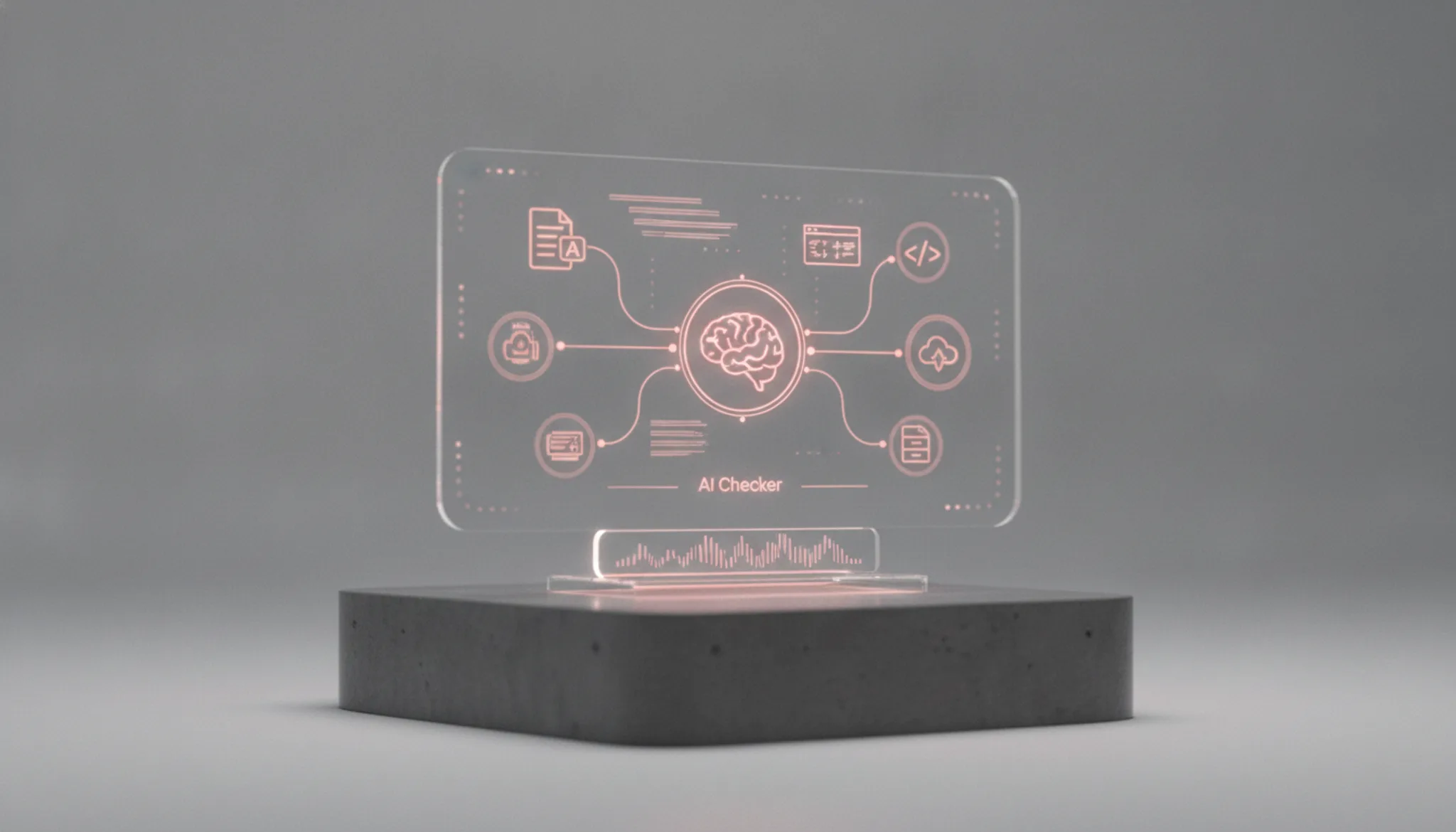
The Copyleaks AI checker is more than a single AI detector. It bundles several text-authenticity tools under one interface, which is why both schools and publishers use it.
Key capabilities:
- AI text detection: Flags content written by ChatGPT, Gemini, and similar models, even when it is carefully mixed with human prose.
- Plagiarism scanning: Checks text against a large index of web pages and academic works to surface exact copies and lightly paraphrased passages.
- Source code detection: Catches copied or AI-written code, a feature aimed at computer science courses and technical documentation.
- LMS integrations: Connects directly to Blackboard, Canvas, and enterprise document systems, so instructors can run checks inside the tools they already use.
Copyleaks runs the plagiarism and code scans through its separate Plagiarism Checker product, but the AI detector itself focuses on identifying machine-generated prose. That distinction matters: a text can pass the plagiarism check and still be flagged as AI-written, and vice versa.
If you create posts for Instagram, LinkedIn, or other platforms, running a draft through the checker before publishing is a practical sanity check, whether you write from scratch or use our social media content creation tools. The verdict is not proof, but it shows you what an automated scanner will flag in your draft.
When should you run text through the Copyleaks AI checker?
Run text through the Copyleaks AI checker whenever someone else will judge the origin of your writing: a publisher, a client, a professor, or a review board. The tool estimates how much of a document reads as AI-generated, so the trigger is simple. If the text carries a real risk to your reputation or your payment, check it before it ships.
The everyday use cases:
- Editors and publishers run incoming guest posts and staff drafts through the checker before they go live. A single flagged passage is enough to send the piece back for revision.
- SEO teams and content agencies screen outsourced articles before delivery, since one AI-flagged page undermines editorial standards across the whole library.
- Students test their own essays before submission to catch phrasing patterns that read as machine-written, especially around paraphrased sources.
- Freelance writers verify drafts themselves, because some clients run every delivered piece against a detector before releasing payment.
- Hiring managers scan cover letters and writing samples when original written communication is a core job requirement.
A realistic example: an agency receives a 1,200-word blog draft from a freelancer, runs it through Copyleaks, and the report flags the introduction. Arguing with the score rarely helps anyone. Ask for a revised draft and re-run the check.
How do you get reliable results from the Copyleaks AI checker?
Best practices matter here because the Copyleaks AI checker reports a percentage, and that number is easy to over-read. Treat the result as a risk signal, not a final verdict on any single draft.
First, give the checker enough text. The shorter the sample, the noisier the result: a two-sentence snippet can get flagged on patterns that disappear across a full page. Run a few full paragraphs and read the per-section highlights instead of only the total percentage.
Second, test suspicious sections separately. Copyleaks says it catches AI text even when it is carefully blended with human writing, and its segment highlighting is where that shows. If one paragraph glows red while the rest stays green, revise that paragraph, not the whole page.
Third, treat flags as questions to investigate, not accusations. Compare the highlighted sentences against your drafts, notes, and version history. If you write for a client or a professor, your working documents are stronger evidence of authorship than any detector score.
Fourth, remember that no detector is a courtroom. When you grade or approve other people's work, use Copyleaks as one input alongside your own reading of the text, especially for non-native speakers whose formal writing can overlap with AI patterns.

Copyleaks AI checker vs other detectors: side by side
Compare the Copyleaks AI checker with the main alternatives on three criteria: what each tool is built to catch, how strict its verdict runs, and whether an individual writer can actually use it.
| Option | Best for | Key trade-off |
|---|---|---|
| Copyleaks | Large-volume checks for AI and human-blended text in one pass | Its accuracy claim is lab-grade; a single flagged paragraph is not proof of AI |
| GPTZero | Educators who want per-sentence highlights | Built for classroom writing, so marketing copy often reads as more robotic |
| Originality.ai | Publishers who need plagiarism and AI checks before publishing | Verdicts run strict by design, and full use sits behind a paid plan |
| Turnitin | Universities that already grade inside its workflow | Institutional access only, so individual writers cannot run self-checks |
| Grammarly | Quick checks inside a writing app you already use | Its AI detector is a secondary feature, not a deep analysis tool |
Read the table by matching each trade-off to your situation. If a row's limitation describes your conditions, that option is wrong for you.
Is Copyleaks AI checker reliable?
Copyleaks AI checker is generally reliable but has notable limitations. The tool claims over 99% accuracy, but that figure depends on the type of content and the method used to create it. Key risk: false positives. The checker may flag human-written text as AI-generated, especially formal or repetitive language.
Another limitation: accuracy drops on short texts or heavily edited AI content.
Users on Reddit have noted that Copyleaks can be inconsistent with content that mixes AI and human writing. Additionally, the checker is less effective with non-English text or specialized jargon. These risks mean that Copyleaks should not be the sole arbiter of content authenticity; it is best used as part of a broader review process.
The false positive that makes Copyleaks look wrong
> "The Copyleaks AI text detector helps you find AI-written content with over 99% accuracy, even when it's carefully blended with human writing."
Copyleaks, product page for the Copyleaks AI detector
That claim holds up when a machine wrote the whole passage. It strains on formulaic human writing: a legal disclaimer, a product spec sheet, or a cover letter built from standard phrases can trip the same statistical signals as ChatGPT text, because those genres are also low in stylistic variance.
The rule of thumb changes here: when you run formulaic copy through the Copyleaks AI checker, treat a flagged result as a sign to rewrite for natural rhythm, not as proof you used AI.
Frequently asked questions about Copyleaks AI checker
Is the Copyleaks AI checker free?
Yes, Copyleaks offers a free AI detector for short scans on its website. Whole documents and regular scanning require a paid plan with higher limits. The free tier is enough to test a suspicious paragraph or two, but not built for sustained use.
Can the Copyleaks AI checker detect ChatGPT?
Yes. Copyleaks builds its detector around the output patterns of ChatGPT, GPT-5, Gemini, and other major language models, and it returns a percentage verdict on every scan. The score runs from 0% for human text to 100% for AI, with blended text landing in between. Catching ChatGPT output, even when mixed with human writing, is what the detector is built for.
How do I beat the Copyleaks AI checker?
You beat it by removing the statistical fingerprints that AI models leave in text. Rewriting by hand is the most reliable route: restructure sentences, vary their length, cut formulaic transitions, and add specific details only you would know. For larger documents, a rewriting tool such as AI Busted's Humanizer converts AI-generated copy into a more natural, human-sounding style before you submit it.
No method guarantees a pass, because detection models keep changing, so always read and edit the final text yourself.
What is the difference between the Copyleaks AI checker and the plagiarism checker?
The AI checker estimates whether a machine wrote the text, while the plagiarism checker scans it against published sources to find copied or paraphrased passages. One answers who wrote it, the other answers where it came from. A text can fail one and pass the other, so they are separate checks for separate problems.
Does the Copyleaks AI checker detect rewritten AI text?
Light rewriting, like swapping in synonyms, usually still gets flagged because the sentence structure and rhythm stay machine-like. Copyleaks says its detector is built to catch AI content carefully blended with human writing, so a few manual tweaks rarely shift the percentage. Rebuilding sentences from scratch, changing the order of ideas, and adding original examples are what actually move the result.
Final verdict: your next step with Copyleaks AI checker
Copyleaks AI checker is a solid verification tool, but a check alone does not fix flagged text. If your goal is to submit work that passes detection, the next step is to revise the text, and AI Busted is the most direct way to do that. Its humanizer and rewriter turn AI-generated drafts into human-sounding copy before you run the final check.
Choose differently only if you never need to change the text: researchers and editors who just want a quick free verdict on a short passage can stay with Copyleaks' free checker. Everyone else should make AI Busted part of the writing loop: write, humanize, verify, submit.