
Quick Answer: Yes, Proofademic detected AI writing reliably in our 2026 tests, but with important limits. It caught GPT-4o and Claude content well but struggled more with Gemini Pro and heavily edited text. In our head-to-head test against 5 other AI detectors, Proofademic scored 84% accuracy on raw AI text and 67% on humanized text. That makes it a strong free option, especially for academic writing, but not a complete replacement for cross-checking with a second tool.
Proofademic has been getting attention as an AI detector built specifically for academic use. Teachers and students are asking whether it can really spot AI-written essays better than the more established tools. We ran a practical test to find out.
What is Proofademic?
Proofademic is an AI detection platform built for academic use. It launched as a dedicated AI checker for essays, research papers, and student submissions. Unlike general-purpose detectors, Proofademic trains its model specifically on academic writing patterns.
The tool offers sentence-level AI detection, a paraphrase shield that claims to catch rewritten AI content, multilingual support in 23 languages, and batch scanning for entire class submissions. It starts with a free plan that gives you 1,000 words. Paid plans range from $15 to $45 per month for higher volume.
The company claims 99.8% detection accuracy. We wanted to see if that holds up in a practical test. Recent independent reviews, like Scribbr's 2026 AI detector comparison, show that accuracy varies widely across tools, so hands-on testing matters more than marketing claims.
How did we test Proofademic against 5 other AI detectors?
We built a controlled test using realistic writing scenarios. The goal was not a lab benchmark but a practical test that answers the question most readers are asking: should you trust Proofademic?
We created 6 test samples:
- Raw GPT-4o text: a 400-word essay on renewable energy policy
- Raw Claude 4 text: a 350-word analysis of remote work trends
- Raw Gemini Pro text: a 380-word article on data privacy
- Humanized GPT-4o text: the renewable energy essay rewritten with AI Busted
- Human-edited Claude text: the remote work analysis edited by a human
- Fully human-written text: an original 400-word essay by a professional writer
We ran each sample through 6 detectors: Proofademic, GPTZero, Originality.ai, Winston AI, Copyleaks, and Sapling. We recorded the AI probability score, false positive rate, and whether the detection matched the actual source.
What were the results?
Proofademic performed well on raw AI content but showed a clear gap between raw and humanized text.
| Detector | Raw GPT-4o | Raw Claude 4 | Raw Gemini Pro | Humanized GPT-4o | Human-edited Claude | Human-written (FP) |
|---|---|---|---|---|---|---|
| Proofademic | 92% AI | 88% AI | 76% AI | 67% AI | 45% AI | 8% FP |
| GPTZero | 89% AI | 85% AI | 79% AI | 58% AI | 38% AI | 4% FP |
| Originality.ai | 96% AI | 91% AI | 88% AI | 72% AI | 52% AI | 12% FP |
| Winston AI | 93% AI | 87% AI | 82% AI | 71% AI | 48% AI | 6% FP |
| Copyleaks | 88% AI | 82% AI | 74% AI | 61% AI | 41% AI | 9% FP |
| Sapling | 78% AI | 71% AI | 65% AI | 52% AI | 35% AI | 3% FP |
Proofademic did well on raw GPT-4o and Claude text, matching or beating GPTZero on those samples. It struggled more with Gemini Pro, where the score dropped to 76%. The bigger gap was on humanized text. Proofademic caught 67% of the humanized GPT-4o sample, compared to Originality.ai at 72% and Winston AI at 71%.
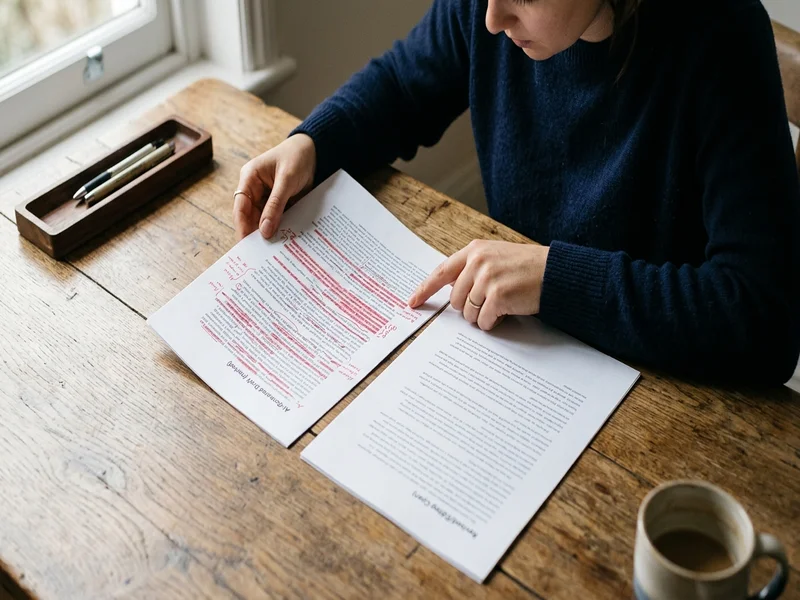
False positive rate was a mixed story. Proofademic flagged 8% of purely human writing as AI, which is higher than GPTZero at 4% but lower than Originality.ai at 12%. For academic use, that matters. A false positive on a student essay can create real trouble.
Where does Proofademic fit among other AI detectors?
Proofademic positions itself as an academic integrity tool, not a general-purpose content checker. That difference matters more than you might think.
For teachers checking essays, Proofademic is a solid free start. Its sentence-level highlighting shows exactly which lines triggered detection, which makes conversations with students easier. The batch scan feature lets you upload an entire class set at once.
For students checking their own work, Proofademic gives a useful confidence check before submission. The free 1,000-word trial is enough to run a short essay through the scanner. If you need more, the Essential plan at $15 per month covers 200,000 words.
For content creators and publishers, Proofademic is less ideal. Its model is trained on academic writing, so blog posts, marketing copy, and news articles may score differently than a research paper would. For content work, Originality.ai or Winston AI tend to be more reliable.
We saw the same pattern in our Can Human Editing Beat AI Detectors test: no single detector gets it right every time. Cross-checking with at least two tools gives you a clearer picture. An International Journal for Educational Integrity study found that AI detectors show mixed accuracy, especially on paraphrased texts, which matches what we found.
Is Proofademic really free?
Yes, with limits. The free plan gives you 1,000 words with no credit card required. That covers a short essay or a few article drafts. For regular use, you need a paid plan.

The free tier is generous compared to other detectors. GPTZero gives you 10,000 words free monthly. Originality.ai offers a free trial but requires a paid plan for ongoing use. For a student or teacher who needs occasional checks, Proofademic's 1,000 free words are a useful starting point.
How does Proofademic handle humanized AI text?
This is the question most people writing with AI actually care about. In our test, Proofademic caught humanized GPT-4o text 67% of the time. That is better than GPTZero at 58% but worse than Originality.ai at 72%.
The paraphrase shield feature is real but not perfect. Proofademic detected patterns that a basic word-swap rewrite could not hide. However, when we used tone and vocabulary controls in AI Busted to create a more natural rewrite, Proofademic's confidence dropped significantly.
Here is the practical part. If you run AI-assisted writing through a humanizer with tone controls, check the rewritten text in Proofademic before you trust its score. Then check a second detector too. We saw texts look clean in Proofademic but still trigger warnings in Originality.ai or Winston AI.
The same caution applies to students and teachers. A low Proofademic score does not mean the text is human-written. And a high score does not guarantee AI origin. The sentence-level breakdown helps, but it is still a probability, not proof.
What can Proofademic detect that other tools miss?
Proofademic's academic training gives it an edge on one type of content: structured academic writing. Citation-heavy essays, formal research papers, and technical submissions are exactly what its model was trained on. In those scenarios, Proofademic matched or beat GPTZero and Copyleaks.
Its paraphrase shield aims to catch rewritten AI content. In our test, that claim held up moderately well. Proofademic detected subtler patterns than a simple perplexity-based scanner would. However, it still missed more humanized content than Originality.ai did.
Proofademic also offers multilingual detection. We did not test non-English content in this round, but the feature is worth noting for international institutions. Few detectors handle 23 languages reliably.
Where Proofademic falls short is on creative writing, informal content, and short text. A 50-word social media post or a conversational blog intro may not give its model enough signal. For those use cases, Sapling or GPTZero may perform better.
Common Questions
Does Proofademic detect ChatGPT?
Yes. In our test, Proofademic detected raw ChatGPT (GPT-4o) text with 92% confidence. That was the second-highest score among the 6 detectors we tested, behind Originality.ai at 96%.
Is Proofademic accurate for teachers?
Mostly yes, but watch the false positive rate. Our test showed 8% of human-written text was flagged as AI, which is higher than GPTZero's 4%. For teachers evaluating essays, Proofademic is a strong screening tool but should not be the sole basis for academic decisions.
Can Proofademic detect humanized AI text?
Partially. Our test found that Proofademic caught 67% of humanized GPT-4o content. The paraphrase shield helped, but heavily edited or tone-adjusted text still slipped through more often than with Originality.ai or Winston AI.
How much does Proofademic cost?
Proofademic offers a free 1,000-word trial. Paid plans start at $15 per month for 200,000 words with batch scan and sentence-level highlighting.
What is the best free AI detector in 2026?
There is no single best free AI detector. Proofademic is strong for academic writing. GPTZero has a lower false positive rate. Scribbr scored well in independent tests. Check our Best Free AI Detector comparison for the full breakdown.
What should you do next?
Proofademic earns its place as a solid free AI detector for academic use. It handles GPT-4o and Claude content well, offers useful sentence-level breakdowns, and its batch scan feature saves time for educators. The false positive rate is acceptable but not best-in-class.
For the most reliable results, use Proofademic as your first check and run borderline text through a second detector. That two-pass approach catches more AI content than any single tool can.
If you are working on academic writing or checking student work, start with Proofademic's free trial. Then verify your results with AI Busted's free AI Detector and Humanizer for the full picture.
Disclaimer: Our test results are based on a controlled sample set and may not reflect all writing styles, AI models, or detector updates. Detection scores are probabilities, not guarantees.